
Last verified: October 2026
It is the last week of the month, and the QS at a 30-person contractor is measuring a variation off a PDF, rebuilding a valuation in Excel and chasing three subcontractors for applications, all before the CVR goes to the directors on Friday.
Quantity surveying software covers two different jobs. Pre-contract tools measure drawings and price bills of quantities. Post-contract tools run valuations, variations, subcontractor payments and the cost value reconciliation once the job is on site. This guide compares eight tools across both stages with prices checked in October 2026, explains what to look for, and matches the tools to the freelance QS, the PQS practice, the contractor QS and the finance director.
What to Look For in Quantity Surveying Software
Pre-contract or post-contract
Pre-contract work is measurement and estimating: takeoff from drawings or BIM models, a bill of quantities to NRM2 or SMM7, and a cost plan. Post-contract work starts when the contract is signed: interim valuations, payment notices under the Construction Act, variations, subcontractor applications, retention and the monthly CVR.
Most tools sold as “QS software” do the first job. A PQS practice working for clients can live with that. A contractor QS cannot, because most of their month is post-contract, so they end up with a takeoff tool for tenders, Excel for everything after award, and a lot of re-keying in between. Decide which half of the job you need covered before you book a demo.
Where your quantities come from
If you measure from PDFs, nearly every takeoff tool will do. If architects send you IFC models, you need BIM takeoff, which narrows the list to CostX and a few others. Check that a revised drawing updates the quantities and the rates linked to them, so you are not measuring the same wall twice.
Rate libraries and measurement standards
A tool that ships with NRM2 or SMM7 structures and a rate library saves days on every bill. Ask which libraries come with it, whether BCIS or Laxton’s data costs extra, and whether you can build up and reuse your own rates.
Link to your accounts
Post-contract figures are only useful if they match the ledger. If your accounts run on Xero, QuickBooks or Sage, look for a direct sync of approved invoices and payments. A CSV export means someone keys the same numbers twice every month.
Price you can find before the demo
Only four of the eight tools below publish a price, and two of those are in Australian or US dollars. Annual contracts and per-seat licences are the norm for takeoff software, so check the minimum term and what a second seat costs.
Quantity Surveying Software Compared
Prices are as published by each vendor in October 2026, excluding VAT unless stated.
| Tool | Stage | Takeoff | BoQ | Valuations and CVR | Accounting sync | Deployment | Price | Trial |
| Planyard | Estimating and post-contract | No | Priced bill with quantities; materials, labour and plant per item | Yes | Xero, QuickBooks, Sage | Cloud | £82 to £164 per PM per month; £40 Estimating | 14 days |
| RIB CostX | Pre-contract | 2D, 3D and BIM | Yes | Not its focus | Excel export | Windows desktop | Quote only | On request |
| Cubit Estimating | Pre-contract | 2D (PDF, CAD) | Yes | Not its focus | Excel export | Windows desktop | AUD 170 to 255 per user per month, annual | On request |
| Bluebeam Revu | Measurement | 2D (PDF) | No | No | No | Windows desktop, plus web and iPad | £264 to £588 per user per year incl. VAT | 30 days |
| CausewayOne Estimating | Pre-contract | 2D digital takeoff | Yes | In other Causeway products | Causeway suite | Cloud | Quote only | Demo |
| Eque2 EValuate | Pre- and post-contract | PDF and CAD; BIM optional | Yes, SMM7 and NRM2 | Via Eque2 Construct | Sage, Xero via Eque2 Construct | Windows desktop | Quote only | Demo |
| RIB Candy | Pre- and post-contract | 2D (QTO module) | Yes | Valuations and cash flow | Export | Windows desktop or hosted cloud | Quote only | Demo |
| PlanSwift | Takeoff | 2D (PDF) | Basic | No | Export | Windows desktop | USD 2,000 to 3,000 per seat per year | 14 days |
"Planyard is a live overview of your projects. How they are performing financially and it is basically a CVR that is live all the time. It has up-to-date data."
Read more
The 8 Best Quantity Surveying Software Tools for UK QS Teams
1. Planyard – Best for Post-Contract Cost Control and Live CVR
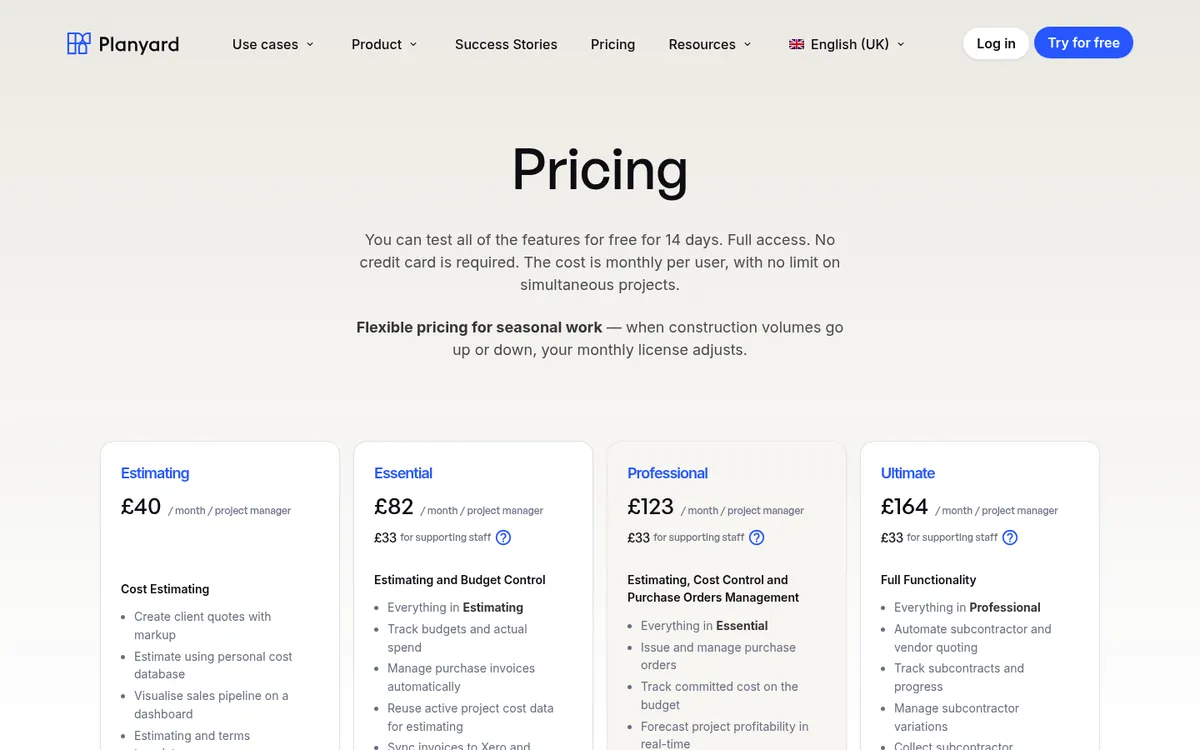
Planyard picks up where takeoff ends. Its estimating prices the bill from your own cost database, with volume calculations for quantities and, on Professional, each item broken into materials, labour and plant, so the estimate doubles as a bill of materials. You can also import a priced bill from another tool. The won estimate becomes the budget, and every commitment after that goes through it: subcontractor tenders with side-by-side bid comparison, subcontract orders with a schedule of values, purchase orders, subcontractor applications submitted against that schedule through a secure link with no login, client valuations with retention and variations, and supplier invoices matched to the order they belong to.
Because orders and invoices are already in the system, the CVR updates as the team works. Committed costs show the moment an order is raised, and every budget change is logged with a date, so the forecast final cost is current on any day of the month. Approved invoices sync to Xero, QuickBooks or Sage with the labour and materials split set for CIS.
Claire Hill, estimator and QS at Brown & Bancroft, used to spend three to four days a month putting CVRs together. Now it takes her 10 to 15 minutes to check the jobs.
Best for: Contractor QS teams and commercial managers at SME main contractors and developers running several live projects on Xero, QuickBooks or Sage.
Watch out for: Planyard has no takeoff from drawings or BIM, and it does not format bills to NRM2. Pair it with CostX, Cubit or Bluebeam if you measure for tenders.
Pricing: £82 per project manager per month on Essential, £123 on Professional and £164 on Ultimate. Estimating only is £40, and supporting staff are £33. Client valuations, variations and retention start on Professional; subcontractor applications and tenders are on Ultimate. 14-day free trial, see pricing.
"When we used to do our month-end CVRs it could usually take 3-4 days to put them together. It now takes me 10-15 minutes to just quickly go through the jobs and check that I haven’t missed anything."
Read more
2. RIB CostX – Best for BIM and 2D Takeoff in PQS Practices

CostX is the tool most UK PQS practices and large contractor estimating teams name first. It measures from 2D drawings and 3D or BIM models, and its workbooks are live-linked to the measurements, so a revised drawing flows through to the quantities and the cost plan.
It is built for measurement and estimating. Valuations and post-contract cost control are not what people buy it for, and the learning curve is steeper than a PDF tool.
Best for: PQS practices and larger contractors that measure from BIM models and produce cost plans and bills for clients.
Watch out for: High licence cost for a sole practitioner, and you will still need something else once the job is on site.
Pricing: Quote only. RIB sells standalone and network licences.
3. Cubit Estimating – Best for Takeoff Inside the Estimate
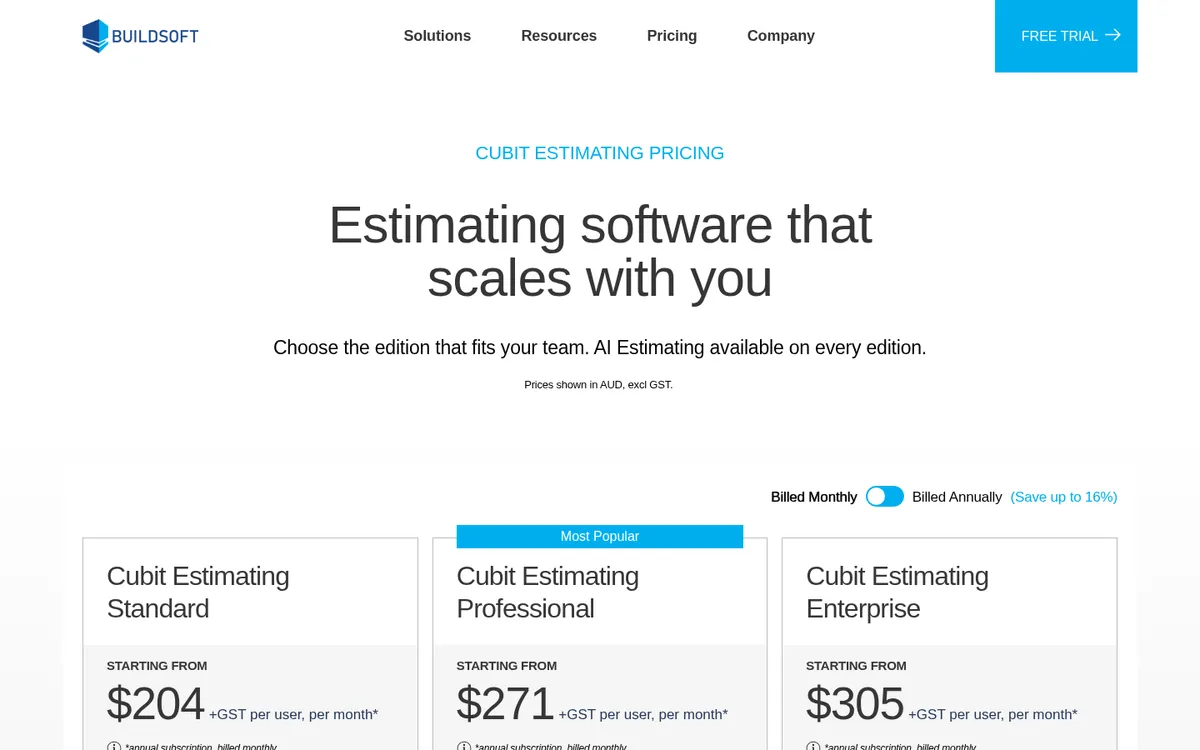
Cubit, from the Australian developer Buildsoft and sold in the UK by BSS, puts takeoff and the estimate in the same screen. You measure from PDF or CAD and the quantities land straight in the priced bill, which suits estimators who would rather not move numbers between two programs.
It comes up again and again in UK QS forums as the favourite of working estimators, usually alongside CostX.
Best for: SME contractors and estimators who measure from PDFs and want takeoff and pricing in one place.
Watch out for: Pricing is in Australian dollars on a 12-month minimum term, and BSS quotes GBP only on request.
Pricing: AUD 170 (Standard), 226 (Professional) and 255 (Enterprise) per user per month billed annually, plus an optional AI add-on at AUD 20. GBP from BSS on request.
4. Bluebeam Revu – Best Value PDF Measurement and Markup
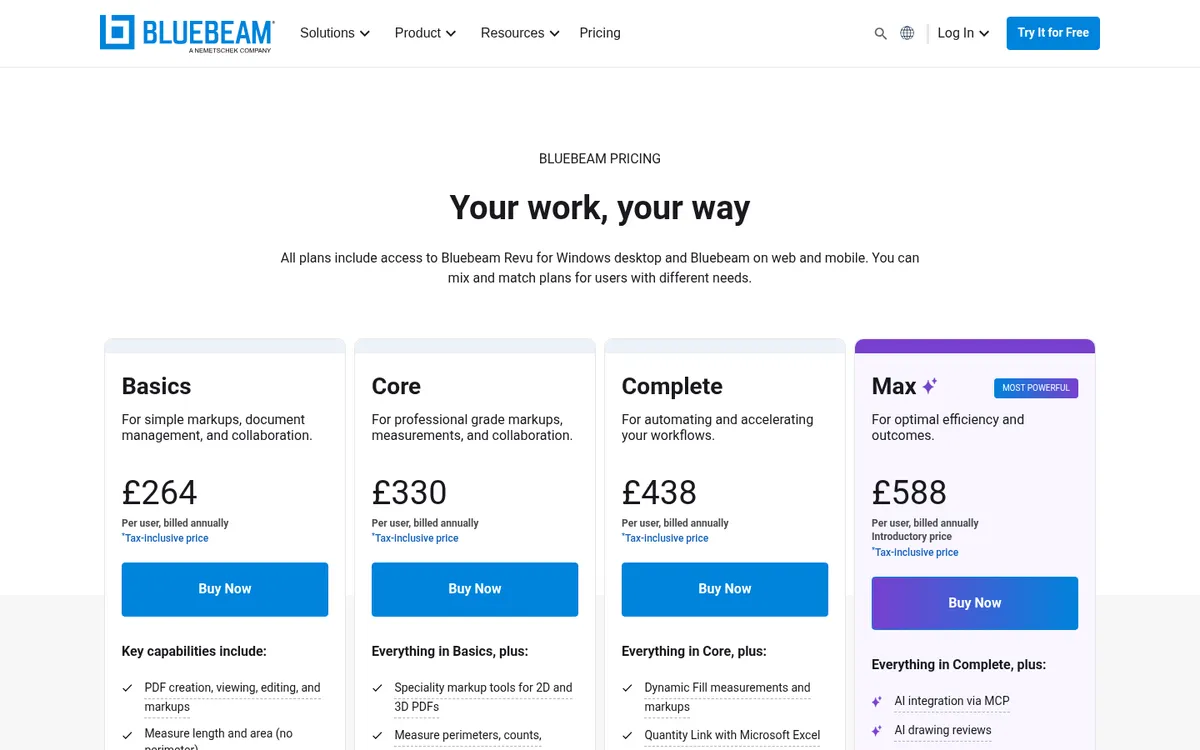
Bluebeam Revu is a PDF tool first. It is very good at it: measuring areas, lengths and counts off drawings, marking them up and sharing them with the design team. Quantities export to Excel, and a lot of QS teams build their bills there.
It does not price a bill, hold a cost plan or run valuations. Treat it as the measuring tape, with the cost work happening elsewhere.
Best for: Freelance QS and smaller teams who measure from PDFs and price in Excel, and anyone who already uses Bluebeam for drawing review.
Watch out for: No BoQ structure or cost data, so the pricing still lives in a spreadsheet.
Pricing: Basics £264, Core £330, Complete £438 and Max £588 per user per year, including VAT.
Measure in your takeoff tool. Run the job in Planyard.
Import your budget, raise the first subcontract order and watch the CVR update. 14-day free trial, no credit card.
5. CausewayOne Estimating – Best for Large Practices and High Tender Volumes
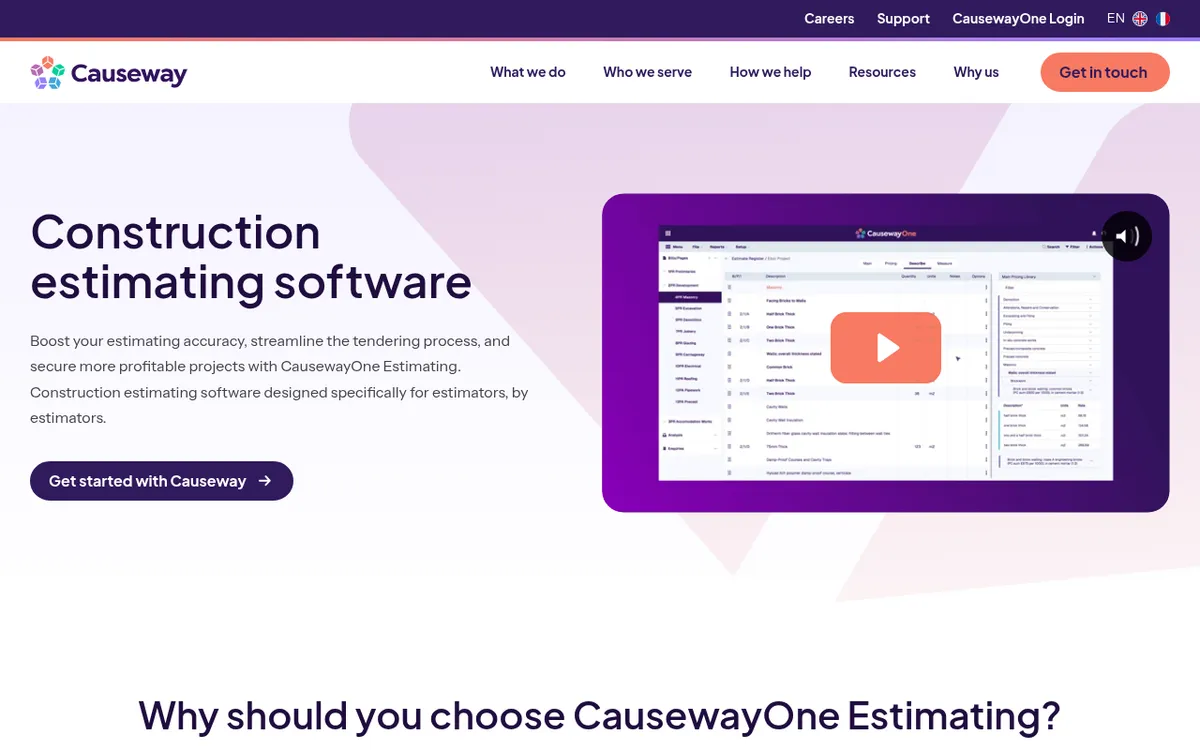
CausewayOne Estimating is a cloud estimating system for contractors and practices pricing a high volume of tenders. It has digital takeoff, a shared estimating database with an audit trail, and trade package enquiries with bid comparison. Causeway says its customers send out more than 1.7 million trade packages a year through it.
Post-contract work sits in other Causeway products, so the full picture means buying into the suite, with the implementation time that comes with it.
Best for: Tier 1 and tier 2 contractors with dedicated estimating departments, especially those already using other Causeway products.
Watch out for: Enterprise pricing and rollout. Overkill for a contractor with one or two estimators.
Pricing: Quote only on Causeway’s site. Causeway also lists Estimating on the government G-Cloud framework, where public buyers can see list prices.
6. Eque2 EValuate – Best for SMEs Wanting UK Rate Libraries and Valuations

EValuate is a UK estimating product with SMM7 and NRM2 structures and rate libraries. Its on-screen takeoff measures from PDF and CAD, with BIM as an option, and amended dimensions update the bill. Eque2 Construct, from the same company, adds job costing, commitments, applications and commercial reporting, and integrates with Sage 50, Sage 200, Sage Intacct and Xero.
Between them the two products cover both sides of the contract, which few suppliers on this list do. See Eque2 vs Planyard and Eque2 alternatives for the post-contract side.
Best for: UK SME contractors who want SMM7 or NRM2 pricing and valuations from one supplier.
Watch out for: Quote-only pricing, and post-contract work needs a second product (Construct).
Pricing: Quote only.
7. RIB Candy – Best for Resource-Based Estimating in Civils

Candy builds estimates up from labour, plant and materials resources rather than all-in rates, which is how most civil engineering contractors price. A takeoff module compiles the bill from 2D drawings, and the estimate carries into project control: cash flow, valuations, subcontract management and earned value. RIB also offers it as a hosted cloud service.
It is a heavyweight tool for contractors who price work from first principles.
Best for: Civil engineering and infrastructure contractors that price from resources.
Watch out for: Overbuilt for building contractors who price from rates.
Pricing: Quote only.
8. PlanSwift – Takeoff for Trade Contractors

PlanSwift is a point-and-click takeoff tool popular with US trade contractors. It turns up in UK QS threads because it is quick to learn, and its assemblies let you count and measure a trade package fast.
For a UK QS it is a takeoff tool only: no NRM2 structure, no valuations and USD pricing.
Best for: Trade subcontractors who measure their own packages from PDFs.
Watch out for: US focus and annual per-seat pricing in dollars.
Pricing: Essential USD 2,000 and Core USD 3,000 per seat per year. 14-day trial.
How to Choose by Role
Freelance QS
Bluebeam or Cubit for measuring, Excel for the rest, is the common setup and a sensible one while the work is mainly pre-contract. If clients pay you to run valuations and subcontractor payments on live jobs, a post-contract tool pays back quickly.
"Timewise, on a single project, I'd probably save 6 to 8 hours—essentially a full day every month. When it comes to processing monthly payments, it saves me a solid day, perhaps even a day and a half, just in sorting through the invoices. Saving a day and a half of my time means the system pays for itself time and time again."
Read more
PQS practice
CostX if you measure from BIM models and produce cost plans for clients; Causeway if you price at volume and already use its other products. Your post-contract work for clients is mostly valuations and final accounts, which these tools leave to Excel or a separate system.
Contractor QS
You need both halves. Use a takeoff tool to win the work, then Planyard from contract award: subcontract orders, applications, variations, client valuations and a CVR that is live rather than rebuilt each month. Our commercial manager vs quantity surveyor guide covers how the role splits as a contractor grows.
Finance director or owner
Your question is margin across all live jobs and whether the cost reports match the accounts. A post-contract tool that syncs with Xero, QuickBooks or Sage answers both without waiting for month-end.
"It easily saves half of a Quantity Surveyor’s time. When you're looking at a £70,000 annual salary, that level of cost-effectiveness makes the decision to implement the system very simple."
Read more
Where to Start
If takeoff is the bottleneck, trial Cubit or Bluebeam first; both have trials. If the CVR, valuations and subcontractor payments are where your month goes, start a Planyard trial with your current budget and see how the quantity surveying workflow looks with live data.
Stop rebuilding the CVR every month
Planyard keeps valuations, variations and committed costs live and syncs with Xero, QuickBooks or Sage. 14-day free trial.