
Parias Construction & Interiors (PCI) is a principal contractor based in Milton Keynes, fitting out and refurbishing hospitals, schools, vets and commercial buildings across the UK. Jobs run from a few thousand pounds to multi-million NHS contracts, with dozens live at once.
We sat down with Ben Kirby, Head of Commercial, who joined PCI in late 2025 from two of the UK’s largest PLC house builders, where he ran commercial teams on COINS. His brief was to bring big-business ideas and implement them in a way that works for a contractor of PCI’s size.
Planyard, already signed up for but unused, was one of the first things he was asked to make work.

Before Planyard: turnover without profit, and no idea which jobs made money
PCI ran on Xero and Excel. Xero handled the banking, estimates lived in a spreadsheet, and purchase orders were raised in Xero so suppliers had something to invoice against.
Revenue per job was known. Cost per job was not.
A £100,000 estimate could be heading for £60,000 or £150,000 and nobody would know mid-job. For three financial years turnover stayed flat while profit shrank, and nobody could see where the money went.
"For three years the business plateaued on turnover, and the profit number, which is the important one, dwindled. Last year it made nothing. The only reason the accounts showed a profit was that some assets were sold to balance it off."

Invoices were checked against the purchase order. If the numbers matched, the invoice got paid. Nobody was asking whether the work had been done.
"Say we order 20 lights and 10 sockets from an electrician, and on site it turns out the sockets aren't needed. Before Planyard, the subcontractor had a PO for a value, they'd claim 100% of it, and we'd have paid for sockets that were never fitted. I know for a fact that's happened."
Why Planyard: what a COINS user looks for in a smaller system
The owners had chosen Planyard before Ben arrived, after looking at other UK cost management systems. It came down to the people, the price, and the fact that Planyard sits on top of Xero rather than replacing it.
They wanted cost control, not a new finance system. Then it sat there for a year: 2 people running the business had no headspace for it. When Ben joined, the rollout became his job.
Getting going took a fraction of the time it had spent idle. A half-hour call with PCI’s account manager at Planyard, then a few hours building cost codes and loading the first job. Later features, like the invoice approval workflow, PCI set up from the documentation alone.
"Our account manager at Planyard spent half an hour with us at a high level. Then we went away, built a cost code database and set up the first job. That took a couple of hours. Half a day to a day and we were properly stuck in."
Ben’s reference point is COINS, the ERP most large UK contractors use. Much of what he asks Planyard for is functionality COINS had:
- subcontract orders with valuations,
- cost-to-complete views,
- audit trails on budget changes.
What COINS did not do was let a small commercial team run it.
In his words it is a bigger animal, harder to shape, with everything extra sold as a bolt-on. The same volume of information took layers of staff plus a finance director to turn project margins into a P&L. Planyard’s day-to-day processing he compares to Apple: the complexity is underneath, and the person logging an invoice does not feel it.
"COINS wasn't user friendly. Planyard is really Apple, in the way Apple is user friendly. There's a lot of complicated stuff in there, because it's a complicated system, but for day-to-day processing it's really easy. That means you don't need as many people to run it."
The other difference is speed of change. Ben has taken a steady stream of requests to his account manager, and many have shipped within months. “One of the big sells for Planyard is how responsive and open they’ve been. I say, have you thought about this? And it gets built. They’ve tailored the product to what their clients need.” From a vendor where every change was a paid bolt-on, that is what he would tell a peer about first.
Cost codes first: the decision that makes or breaks the rollout
Ben is clear about why the first attempt failed. The company had structured Planyard around how it quoted.
Sales income is one thing, cost is another: a cost control system has to be built around the packages of work you order against, not the lines you sell. Once you detach the two and build a cost database around how you actually buy the work, it starts to make sense.
PCI’s work is too varied to price per square foot the way a house builder can, so Ben built a two-level structure around the packages PCI orders. Groundworks, partitions, electrical, decoration and so on, with labour codes in the 100 range and matching materials codes in the 1000 range.
The hard part is granularity. Too few codes and you cannot tell what a foundation actually costs. Too many and invoices land in the wrong place. PCI has four codes for kitchens alone, depending on who fits them and supplies the materials, and Ben is trimming that back.
The payoff is reusable cost data: for a quick estimate on a foundation or ceiling, Ben filters by cost code across past jobs and sees what PCI actually paid. Estimates stay in Excel, because PCI might bid five jobs to win one. Once a job is won, he codes the estimate and uploads it as the budget. Moving the pricing schedule into Planyard is next on his list.
Ben has written the procedure up as an internal best practice guide, from coding the estimate to who signs off what. Writing it, he says, forces you to decide how you want everybody else to do it.
"I'm a firm believer that process beats skill. If you have strong processes, things happen without anyone having to try. You're not relying on people having to think. It becomes the norm."
Every order and every invoice through one approval workflow
With the budget in place, nothing gets committed or paid outside Planyard. The 2 business administrators raise purchase orders. Ben checks the value, cost code and project. The operations director, who is also one of the owners, then signs off. Once an order is issued, PCI is liable for it. Invoices follow the same route into Xero.
Ben is candid that this takes control away from people, and that it is not about trust. Administrators who are not close to the jobs cannot be expected to spot a wrong day rate or a changed scope. The workflow puts the call with the people who have the context, without slowing anyone down.
Queries stay inside Planyard. If Ben is not happy with a day rate, he says so in the comments on that order, and the operations director sees the same thread, so “where’s the order for the cleaner?” answers itself.
With every order and invoice in the system, the monthly cost review runs off live numbers instead of a rebuilt spreadsheet.
Ben sits down with the project manager, goes through the live jobs line by line, and revises the budget wherever the forecast has moved. Planyard flags any line where orders already exceed the budget, so problems surface before the invoices arrive, and the dashboard shows the forecast final margin on every job.
"If I can see we've only got two weeks in the budget left but we're going to be on site for four, I revise the budget in Planyard so our final position is correct. Or I had £5,000 in for protection and didn't need it, so that money comes out. Knowing where the final margin is going to land is what lets us make decisions."
Every order approved. Every invoice matched.
Set up cost codes, approval workflows and the Xero sync in an afternoon. Know the cost on every job from day one.
The Plymouth job: £150,000 profit or break even
The example Ben keeps coming back to is a job in Plymouth, four and a half hours from the office. Site staff are on fixed day rates, but working away adds hotels, mileage, food and overnight allowances. Each cost was signed off individually, so the business “knew” about them. Nobody added them up against the job.
"On a job four hours away, a person's daily cost is twice their salary once you add the hotel, mileage and food. We thought someone cost us £250 a day. Planyard showed it was closer to £500."
Jobs like that are part of why the previous year made nothing. On Plymouth the away costs were budgeted from the start and tracked as they landed. Ben puts the profit at £150,000, and says that without seeing those costs up front it would have broken even.
The same information changed the final account meeting. Instead of arguing every line item, PCI walked in knowing its cost position, where it could give ground, and what outcome it needed.
"Having everything nailed in Planyard meant we went into the final account meeting and could say straight away: we can't accept that, but we can accept that. We went from a four-day argument over every line item to knowing we'd made £150,000 on the job, being happy with it, and moving on."
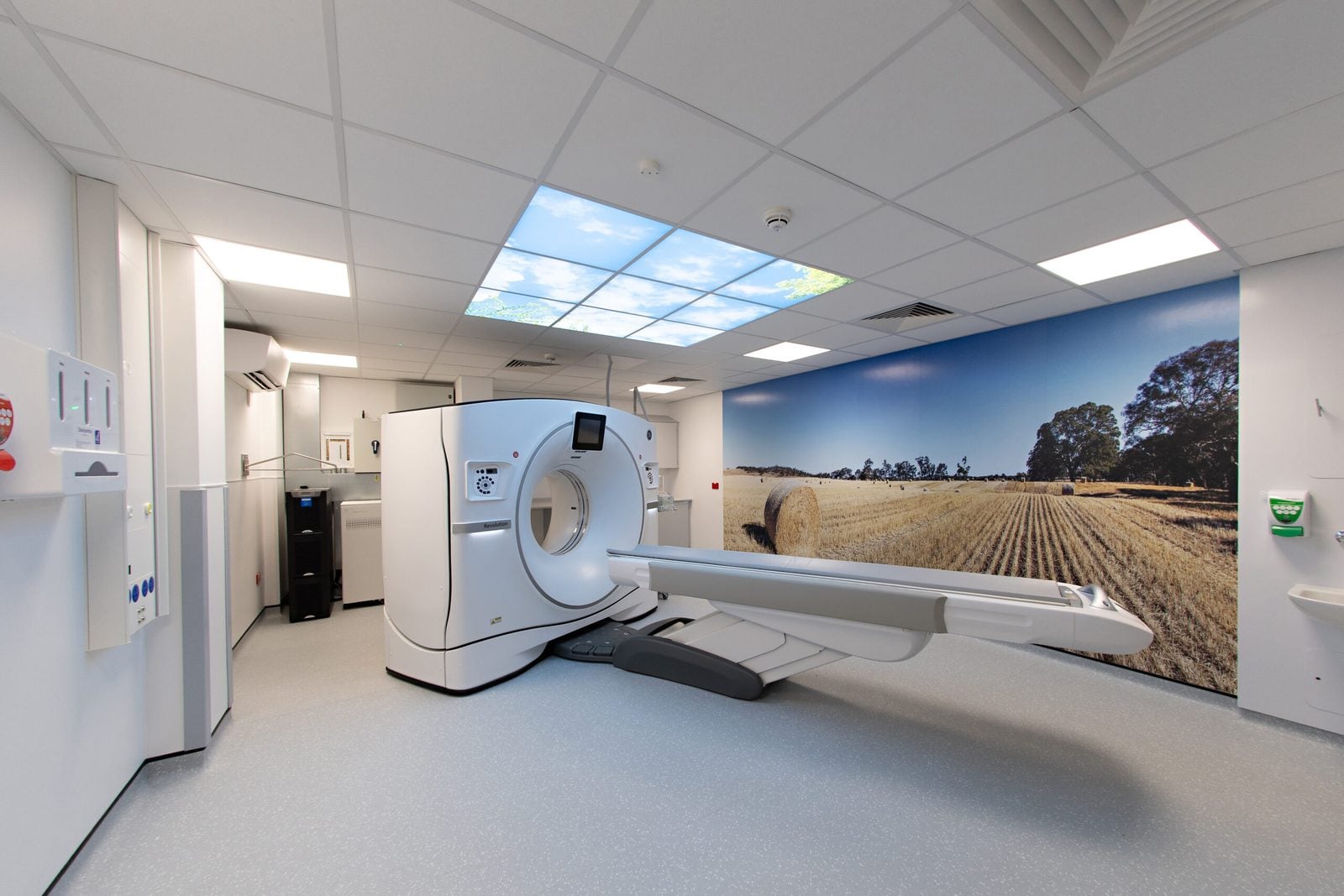
It also feeds the next tender. PCI now prices working-away jobs on what they actually cost, and can look for patterns across the portfolio. If, say, the last three scanner room jobs had made no money, Ben would see it and could either tender that work differently or stop chasing it.

Culture: holding on to what you’ve won
Asked what the biggest difference has been, Ben starts with culture, not reports. Before Planyard, project managers could instruct works without anyone checking whether it was in scope, already priced by the subcontractor, or chargeable to the client. Saying yes was easier than arguing, and £10,000 of extra subcontractor work could vanish into the accounts unseen.
"The biggest thing Planyard has done for PCI is improve the culture. It showed us where people who thought they had the authority to instruct works weren't acting in the best interest of the business. Not deliberately. People take the easy option, and without the information, we couldn't challenge it."
Ben’s example is a wall. Building and decorating it costs what the estimate said. Going back three times to fix it, or repairing a hole somebody else made, is money that never gets claimed and never shows up as a line. Last year nothing was quoted without profit and the year still ended in a loss: “That’s not the quote being wrong. That’s the control being wrong.”
Now the operations director goes through every invoice against its order with the project managers, and the ten sockets that were never fitted get picked up. Where a job is drifting, PCI knows while it can still act.
And when a client claims something was in scope, Ben can see whether there is margin to absorb it: on the right job for the right client PCI will carry £50,000 to keep the relationship, and on a job already over budget the answer is a variation.
"You don't make profit through what you win. You make profit through holding on to what you've won."
The results: from bare break-even to meeting the margin, no extra headcount
PCI’s financial year ends in October. The year before, every job was quoted with profit in it and the business still ended in a loss, with an asset sale the only reason the accounts broke even. This year it is on track to meet its margin, on more turnover and with the same team.
Ben is careful to say several things changed at once, including his arrival and bigger, longer projects. But he puts Planyard at the centre of it, and calls turnover a dangerous place to be, because it is not profit.
"This year PCI has gone from bare break-even to meeting its margin. It's a number of things, but a big part of it has been Planyard giving us control."
For the owners, it is the first year in a while that the business has paid them back. One is the final approval on every cost going out. The other brings the work in. Right work in, delivered under control, and the profit comes out the other end.

Ben will not claim Planyard saves hours. Putting every order and invoice through two-stage approval is more admin than paying whatever matched a PO. The difference is who spends the time. The admin team processes the information, while the two decision-makers use it to make quick decisions throughout the day. Previously, gathering that information took too much time and money. The alternative was hiring, and hiring would have eaten the profit.
"To get this level of information without Planyard, we'd have had to take on five more people. And then you've wiped your profit out again."
What’s next: growing without growing the back office
Ben is the first to say PCI is only using a fraction of what Planyard can do, and the plan is to unlock the rest. Client valuations and variations are next: they still go out from Excel, the main order is easy but the variations are the weak point, and both belong in Planyard.
"Planyard is a really user-friendly cost management tool that has helped us improve the culture of our business. I'm probably only using 20 or 30% of what it can do, so I'm underselling it. If you integrate it into your business properly, it will generate benefits."
Next come subcontractor valuations. These will replace the current purchase-order workaround: subcontractors will submit their valuations through a link on the 20th of each month, rather than emailing spreadsheets that can get lost.
After that, the focus turns to the remaining leaks. Site staff day rates and expenses are still entered by hand. Plant hire is another issue: an eight-week order can stretch to ten weeks, and that slippage can add half as much again to the hire bill.
Two things changed during the interview itself. Automatic invoice scanning, which had never been switched on, went live. And the RFQ module for running tenders, which Ben had not explored, got a one-word review: “mega”, because chasing quotes out and back has always been a gripe.
PCI is planning for around 20% growth next year. A QS joins in January, and another estimator may follow. Ben’s rule of thumb is that every 20% of growth needs two more people: one to price the work and one to build it. The point of Planyard is that the number stays at two.
New hires may be better than you, Ben says, but they will not care the way you do, because it is not their business. With Planyard an owner spends an hour a day checking what is going on and asking the right questions, instead of all day managing. That is 75% of their day back for growth.
Asked how he describes Planyard to a peer, Ben says he cannot fault the team, that they have been really supportive and really helpful, and that he is plugging them wherever he can.
Protect the margin on every job
See committed costs, approve every order, and know your final position before the final account meeting.