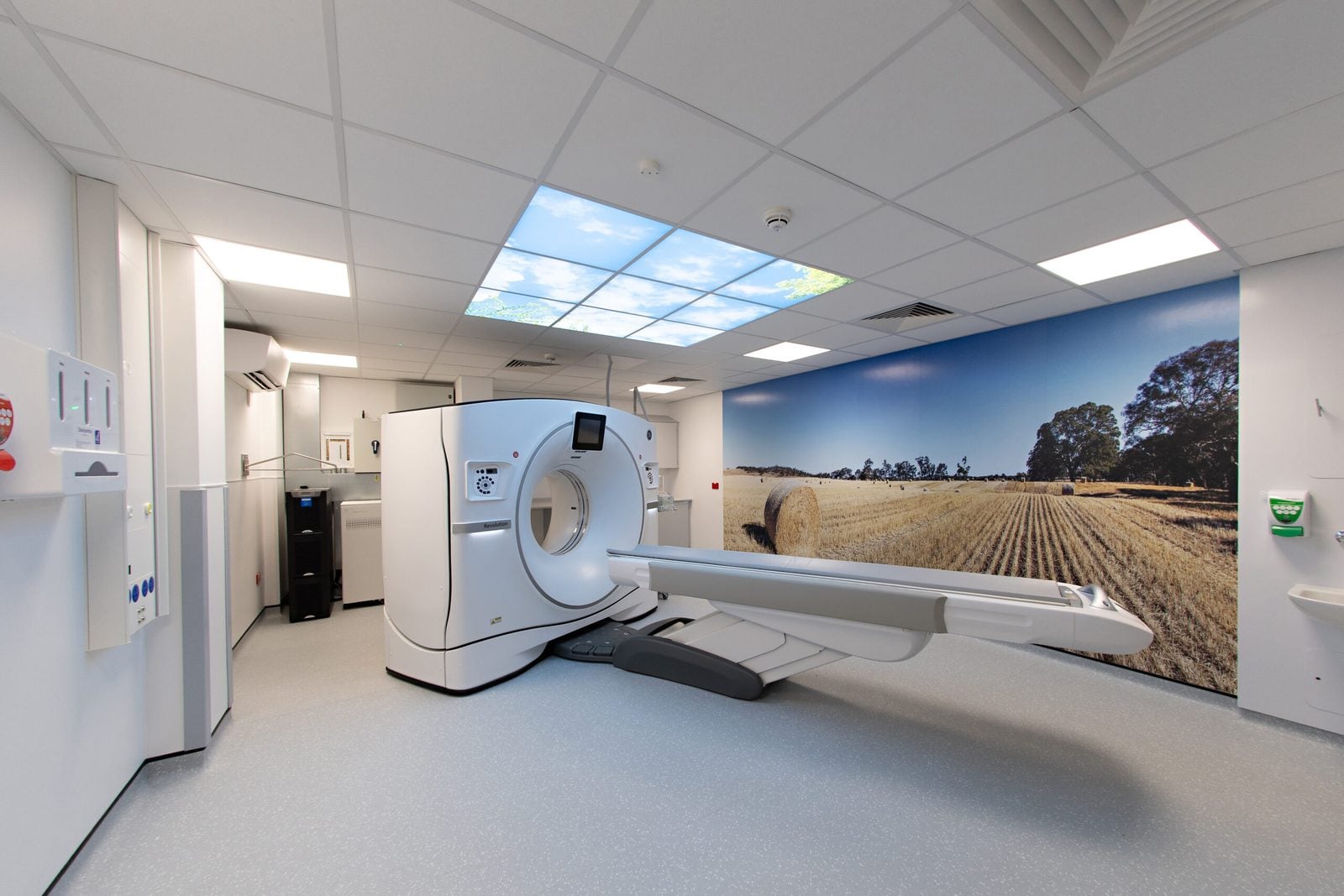
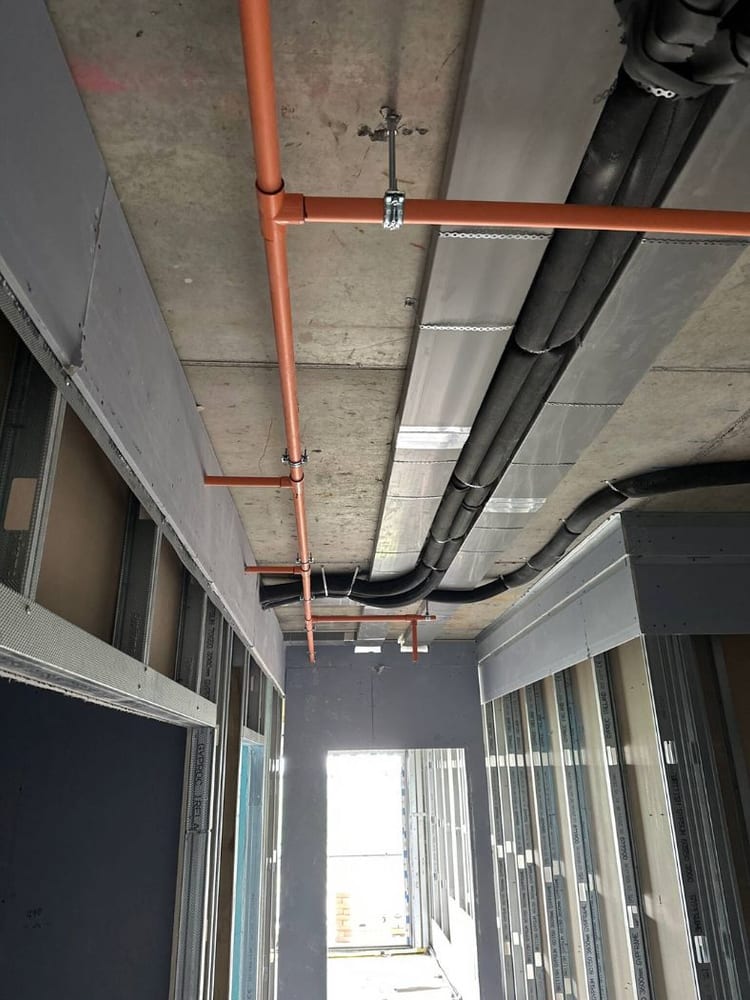
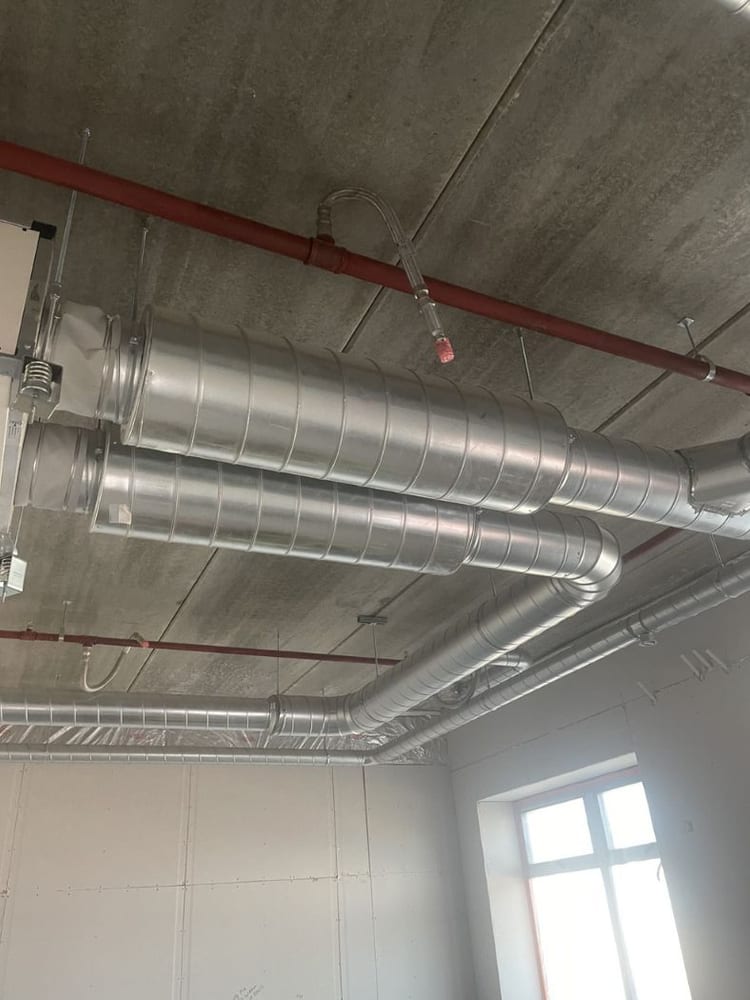
ReCom Fire Protection designs, supplies, installs, commissions and services sprinkler systems and wet and dry risers. The company is based in London and works across the UK, from a site-wide dry riser system at the Queen Elizabeth Hospital in King’s Lynn to a 269-apartment residential sprinkler system at Hurlingham Waterfront and a school in Swaffham. Projects run from £1,000 remedials that take a day to £500,000 installs that run for two years, and there are around 70 live jobs on the books at any time.
The company was incorporated in September 2023 and has five people: three directors and two in-house designers, with installation labour subcontracted. Meet Richard Edwards (Director, finance and residential operations) and Alfie Cox (Director, commercial operations). Between them they raise every purchase order, approve every invoice and do all the quantity surveying for a business turning over several million pounds a year.
"A company of five employees, and Planyard has probably saved us three: an office administrator, a quantity surveyor and an extra accounts person. That's well over £100k a year in salaries, before employer's NI and pension on top."

Before Planyard: Excel, Word and a laptop on the hard shoulder
ReCom started the way most small contractors do. Budgets and job cost performance lived in Excel with simple formulas. Purchase orders were Excel templates converted to PDF and emailed to suppliers, with a separate spreadsheet acting as the PO register.
"Before Planyard, every purchase order was an Excel template converted to PDF and emailed. A few minutes each, but it adds up on a busy day, and so does the stress."

The spreadsheets worked at a desk. The problem was that Richard and Alfie were rarely at one. Both were driving to sites up to two hours away, and purchase order requests arrive from site teams whenever the engineers need material, not on a day set aside for admin. Getting material to site quickly is what keeps the next job moving.
"Our supplier cut-off is 3pm and the engineers send their material list at half two. That used to mean 30 minutes to find somewhere to stop and get the laptop out. In Planyard most of those steps are gone."
There were smaller leaks too. The PO register occasionally produced duplicate numbers. Template prices drifted away from what suppliers were charging. And with no shared resource list, a single supplier price change meant editing every open project by hand.
"A supplier price change used to mean editing 30 spreadsheets for 30 open projects. In Planyard I update the resource list once and it flows to every project."
A year on the wrong system
When ReCom first looked for software, they registered with Planyard. Then they chose another construction management system instead, mainly because it had a mobile app. Pricing was similar, and an app sounded like the answer for two directors who live on the road.
"Our previous software sold us the dream. It looked all singing, all dancing, and then we were in contract. It took a big training block just to get up to speed."
The app did not work for them and they stopped using it within a few months. The web version was slow, with loading problems Richard ended up screen-recording for the vendor’s support team.
"Raising an application in our old software took the best part of ten minutes. While its screen was still loading, I did the same thing in Planyard in about 90 seconds."
Onboarding was mandatory half-day training blocks, with templates built alongside a vendor engineer. After that, questions went to a support group where the answer was often that someone would check with a colleague. Extra help cost extra.
"Our previous software needed half-day training blocks, and after four or five hours you don't retain it anyway. We learned Planyard by using it, and it stuck."
The contract was for two years. ReCom signed up to Planyard in January thinking the term ended in July and paid for both systems for six months. When Richard gave notice, he was told the term actually ran to July 2027. The two companies are still discussing it.
"We didn't jump ship at the first problem. We spent the best part of a year trying to make our previous software work before moving to Planyard."
Choosing Planyard, second time round
While still on that system, Richard and Alfie went back to the shortlist and got in touch with Carl at Planyard again. This time the evaluation was a month’s free trial rather than a sales presentation.
"I'm a big believer in try before you buy. Planyard gave us a month's free trial. If we'd been able to trial our previous software the same way, we probably wouldn't have bought it."
The other difference was how questions were answered. Both directors say the same thing: when Planyard cannot do something yet, the team says so.
"When we've asked whether Planyard can do something, they've been honest and said no, not at the minute, but it's gone to development. We always know what it can and can't do."
Richard’s version is about how the relationship has run since.
"Planyard's approach has not been a sales pitch. They know the system inside and out, jump in and fix things for us, and understand how we do things."

Raise the order from site in 90 seconds
Purchase orders from a phone or iPad, costs on the job the moment you hit send, bills straight into Xero.
Implementation: a week of trying to break it
Setup was budget templates in Excel plus a resource list of the materials ReCom orders every week. Once those two things were in place, moving a project across was straightforward. New and early-stage jobs went straight into Planyard. Anything more than halfway through was finished in the old system, because the time saved on the remaining work would not have justified re-keying what was already done.
"Setting up Planyard was a week of trying to break it and a couple of pointers from their team. So much easier than our previous software."
Neither director read a manual or watched a training video. They learned the system by using it, which is also how they expect to onboard the project manager they are now recruiting.
"You should be able to put software on somebody's desk and they should be able to use it. When we take on a project manager, they'd have to be idiots not to pick Planyard up pretty quick."
Day-to-day: purchase orders from wherever they happen to be
Purchase ordering was the original search, and it is still the daily workload. ReCom raises anywhere from one to twenty purchase orders a day. Each one is now a matter of picking items from the resource list, assigning them to a budget line and sending the automated email to the supplier. Richard estimates purchase orders used to take about 30 minutes a day on Excel and now take under 15, and that it is done from an iPad or a phone as often as from a desk.
"I've stood on site with the engineers and raised the purchase order in Planyard on my phone, there and then. It's web based, so it's the same on a phone, an iPad or a desktop."
Richard’s example is from further afield than a site visit.
"On holiday I chuck the iPad in the beach bag. When a purchase order request comes through, I go up to the bar, place the order in Planyard in a few minutes and carry on."
Because every purchase order lands on the job the moment it is sent, the project view is never waiting for a month-end update. Overspends show as red figures on the left of the project list, and Richard opens a job when a number turns red rather than on a fixed reporting cycle.
"You can really get into the numbers on your project, and Planyard is always up to date, because as soon as you send a purchase order that cost is on the job."
The colour coding does most of the work on that screen.
"It sounds childish, but the red and the green in Planyard give you an at-a-glance update on every project and every line item. Approving is green, declining is red."
On the accounting side, ReCom moved from QuickBooks to Xero while on the previous system, partly on their accountant’s advice. Supplier bills and sales invoices now go from Planyard into Xero through the Xero integration, so the directors no longer create a project in Xero for every job and assign costs to it by hand. Job-level performance is read in Planyard, and Xero stays the accounting system.

What it means for the owners
ReCom has no quantity surveyor, no office administrator and no in-house accounts person. The two operations directors do that work themselves, between site visits.
"We don't have a QS or an extra person in accounts. We are the quantity surveyor, doing it as we go, and Planyard is what makes that possible."
That is a deliberate strategy. Richard’s comparison is with competitors turning over £40 million with 300 staff: ReCom wants each person to carry a much larger share of turnover, and the software is what makes that possible.
"Our goal from the beginning has been to employ as few people as we can and let technology do the rest. Planyard is a big part of why we can run the business ourselves."
Richard’s own estimate is that on a good Excel process they would have eight people by now instead of five: an administrator at around £30,000, a quantity surveyor at £50,000 to £60,000 before qualifications, and an accounts person at around £30,000, plus employer’s National Insurance and pension on top. The directors also see a quieter benefit: they can take their time over the next hire instead of grabbing whoever is available.
"Planyard lets the two of us do so much that we can be selective about who we hire, instead of taking a risk on the next person. Without it, 70 live jobs is too much for two people."
With costs live on every job, decisions that used to mean digging through an estimate spreadsheet are now made from the revised budget. Alfie uses it to decide how hard to chase a variation.
"I update the revised budget in Planyard regularly to see whether we're heading for a positive or negative variance. If it's positive, I might buy a better product or be more accommodating on a variation for a key client."
The revised budget also shows how many variations each subcontractor team generates.
"In Planyard I can see one job with 20 variations from one team and another with five. It helps me score our subcontractors. If we get variations for everything, we'll use them less."
For Richard, who looks after the finances, the projects page has become the company dashboard. It shows remaining income, remaining cost and forecast profit across every live job.
"Planyard makes me sleep easy at night. I can see what's still to be made across all our projects, and that it covers the vans, the labour and the management with profit left at the end."
He reads that against the bank balance.
"Sometimes the bank account drops to quite a low amount and I think, what's going wrong? Then I look at Planyard and see exactly which invoices haven't been paid yet."
The same view answers the hiring question. A project manager is a salary that comes straight off the bottom line, and the remaining cash flow across the portfolio is what tells the directors whether the business can carry it.
"A new salary comes straight out of our pockets. The remaining cash flow on Planyard's projects page tells me whether there's enough coming through to employ somebody for that wage."
The projects page also answers the simplest question: how many jobs are live right now.
"One click on projects in Planyard gives me the wide-angle view of the company: remaining income, remaining costs, profit, number of live jobs. With spreadsheets I'd have spent ten minutes just counting them."
Still on the wishlist
ReCom would still like a native mobile app, although both directors say the web version on an iPad does the job. Richard would like to group the 70 projects by client or by division, and to see outstanding applications alongside invoiced income in the cash flow view.
These requests have gone to Planyard’s product team and are in progress, and the directors’ view is that the system changes often enough for them to expect the improvements to arrive.
"Planyard is very user friendly, you get good customer support, and they're constantly developing the system. It's not an old system that's fixed."
Takeaway for owner-run specialist contractors
ReCom shows that a growing specialist contractor does not have to hire a QS before it gets proper cost control. Two directors with, in Alfie’s words, basic computer literacy run 70 live jobs from the road, with cost control that updates itself every time an order goes out. The year on the other system also offers a lesson in evaluation: an app on the feature list and a confident sales call told them less than a month’s trial did.
"We're not developers, we have basic computer literacy, and Planyard is so easy to use and quick to set up. Eque2 or Planyard? It's a no-brainer."
Richard’s last word is about where ReCom goes from here.
"We speak very highly of the platform. We're not going to leave. As long as ReCom trades, Planyard is the platform."
Run 70 jobs without hiring a QS
Budgets, purchase orders, valuations and the Xero sync in one place, set up in a week, no training blocks.