
Search for construction bid management software and you get two different kinds of result. One group of tools is built for general contractors chasing public and private work: a bidder network, a plan room, and a way to invite hundreds of subcontractors at once. The other group is built for teams that have already won the job and now need to manage cost: comparing subcontractor quotes, choosing one, and turning that choice into a contract without losing track of the budget. Which one is right for you depends on which job you are actually trying to do.
Last verified: October 2026
So this guide is split by job. The first section covers tools for finding work and sending or answering invitations to bid: BuildingConnected, PlanHub, iSqFt, SmartBid, Procore and Pantera Tools, ranked on their own merits. The second covers general contractors and subcontractors who invite, compare and award subcontractor bids against a project budget, where Planyard and Buildertrend sit. Planyard is our product, so we rank it only in that second section and say where it falls short. We checked each vendor’s own site for pricing and features rather than relying on third-party review sites, so the numbers below are what each company publishes, not an estimate.

The Best Construction Bid Management Software, Ranked
A bidder network for chasing new work and a cost control system for comparing subcontractor quotes solve different problems, so the table groups the tools by job, with the best fit for each job first. Prices and features come from each vendor’s own site.
| Job | Tool | Best for | Market | Starting price (verified October 2026) | Bid comparison and subcontractor tendering | Verdict |
| Finding work and bid invitations | BuildingConnected | GCs wanting the largest subcontractor network with formal bid leveling | US, UK, Ireland, Australia, New Zealand | Not published; requires contacting Autodesk sales | BuildingConnected Pro and Bid Board Pro with a dedicated Bid Leveling tool for side-by-side comparison, plus TradeTapp subcontractor risk scoring | A solid pick for GCs who want Autodesk’s network and don’t mind a sales call to find out what it costs. |
| Finding work and bid invitations | PlanHub | Subcontractors and suppliers finding new bid opportunities | US | Subcontractor Premier plan from $1,999/year for a 50 mile radius; GC pricing not published | Bid Board, Smart Bid Coverage tracking and a Bid Builder tool, with GC-to-sub matching across the PlanHub network | Worth it mainly for the lead volume on the subcontractor side; less built out as a bid comparison tool for GCs than BuildingConnected or SmartBid. |
| Finding work and bid invitations | iSqFt (ConstructConnect) | GCs already using the ConstructConnect or Blue Book network | US, Canada | Not published; a free tier exists for subcontractors | Plan room, invitation-to-bid distribution and prequalification, with paid tiers adding full bidder lists and a customisable bid board | Most useful for sourcing and qualifying subcontractors, not for comparing the bids once they arrive. |
| Finding work and bid invitations | SmartBid | GCs wanting a dedicated bid comparison worksheet | US | Not published; pricing page requires a sales call | Send Invitations to Bid, receive proposals, and compare them line by line using the BidTabs worksheet | Built specifically around comparing subcontractor bids, but it stops at award, so cost control after the bid is won sits elsewhere. |
| Finding work and bid invitations | Procore | Enterprise general contractors running bid management inside a full project suite | Global, including the UK, Australia and Canada | Not published; custom annual fee based on Annual Construction Volume | Create, manage and level bid packages and invitations, carried through to estimate and contract | A strong option if you are already standardised on Procore, though the ACV-based pricing puts it out of reach for most small contractors. |
| Finding work and bid invitations | Pantera Tools | Budget-conscious GCs wanting a lighter invitation-to-bid tool | US | Not published; pricing is quote-based after a demo | Branded bid invitations, an integrated plan room, and document and RFI sharing | Covers sending and tracking invitations well, but there is no dedicated bid leveling screen on its own feature pages. |
| Comparing and awarding against the budget | Planyard | Inviting, comparing and awarding subcontractor bids against the live budget | Global, strongest in the UK, Ireland, EU, Australia and US | From $52/month per project manager; tendering features from $210/month per project manager | RFQ module with side-by-side bid comparison, multiple bidding rounds, no login required for subcontractors, winning bid converts into a subcontract order with schedule of values or a purchase order | Best fit for small to mid-size contractors and developers who want bid comparison tied to the live budget rather than a separate bidding network. |
| Comparing and awarding against the budget | Buildertrend | Residential builders and remodelers sending bid packages to a handful of trades | US, Canada, Australia, New Zealand, UK | Not published; pricing is a custom quote after a questionnaire | Bids feature sends packages to multiple subcontractors at once with deadline reminders, tied back into estimates | Fine for simple residential bid requests, but it is not a subcontractor tendering platform and has no formal comparison screen. |
The sections below go through each tool in the same order, with who it suits, who it doesn’t, and what we could verify on price.
Best for finding work and running bid invitations
These tools are built around a bidder network or a plan room. Subcontractors use them to find projects and submit bids, and general contractors use them to send invitations to bid to a wide list of trades and track who responds. Most stop at award, so the budget and the contract live in another system.
1. BuildingConnected
BuildingConnected, part of Autodesk, runs the largest subcontractor network of the tools on this list, with more than a million construction professionals on it. GCs use BuildingConnected Pro to send invitations and then its Bid Leveling tool to line bids up side by side, plus TradeTapp to check a subcontractor’s safety and financial risk before awarding work. Subcontractors get a Bid Board Pro to track the invitations they receive.
Pricing is not published on BuildingConnected’s own site; getting a number means talking to an Autodesk sales representative. The product is available beyond the US, in the UK, Ireland, Australia and New Zealand, which makes it one of the few tools on this list a UK-based GC can actually use day to day.
BuildingConnected is not built for managing cost after the bid is won. It stops at award, so a team still needs a separate system for budgets, invoices and change orders.
2. PlanHub
PlanHub is primarily a bid network. General contractors post invitations to bid, subcontractors and suppliers browse a database of thousands of live projects, and a Bid Board keeps track of who has responded. Its Smart Bid Coverage feature flags gaps where a trade hasn’t yet been covered by an invited bidder.
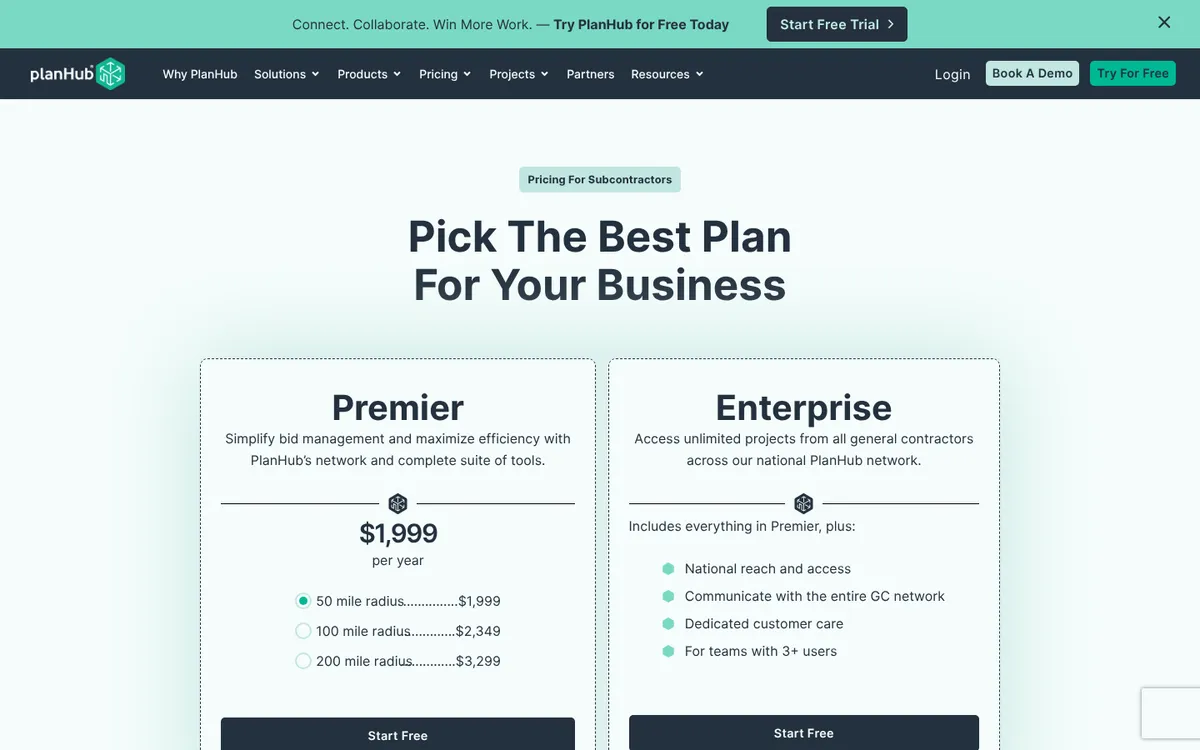
Pricing for subcontractors is published and starts at $1,999 a year for a 50 mile radius, rising to $3,299 for a 200 mile radius, verified on PlanHub’s own pricing page in October 2026. General contractor pricing is not published and requires a sales conversation.
PlanHub is US only. It is also stronger as a lead generation and coverage tool than as a bid comparison tool once the quotes come in; GCs who need a formal leveling worksheet tend to pair it with, or choose instead, SmartBid or BuildingConnected. For where to find the bids in the first place, see our guide to construction bidding sites.
3. iSqFt (ConstructConnect)
iSqFt is one of the older names in construction bidding and now operates as part of ConstructConnect, alongside the Blue Book network. It is built around a plan room and invitation-to-bid distribution, with prequalification tools to vet subcontractors before they are invited.
ConstructConnect does not publish pricing for iSqFt. There is a free tier for subcontractors that lets them view and organise projects they have been invited to bid on, with paid access adding full bidder lists and a customisable bid board, confirmed on the vendor’s own product page in October 2026.
iSqFt serves the US and Canada. It suits a GC already inside the ConstructConnect ecosystem for finding projects, but it isn’t the tool to reach for if bid comparison, rather than bid distribution, is the main problem.
4. SmartBid

SmartBid is aimed squarely at general contractors who want a dedicated tool for comparing subcontractor bids rather than a full project management suite. Its BidTabs feature is built for exactly that: collecting scope sheets and bid forms from subcontractors and laying them out so an estimator can compare prices line by line.
SmartBid does not publish pricing. Its pricing page returns a dead link, and the only way to get a number is a call to its sales team, which we confirmed by checking the vendor’s own site in October 2026.
SmartBid is US only, so it won’t be the right result for a UK reader. It is also a GC-side tool; subcontractors don’t get the same comparison view, and once a bid is awarded, SmartBid hands off to whatever system handles the contract and the budget.
5. Procore
Procore is the general project management platform that most large contractors already run their jobs through, and bid management is one module inside it rather than a standalone product. It lets a GC create bid packages, invite subcontractors, level the responses, and carry the winning number through to a contract, all inside the same system used for scheduling, drawings and daily logs.
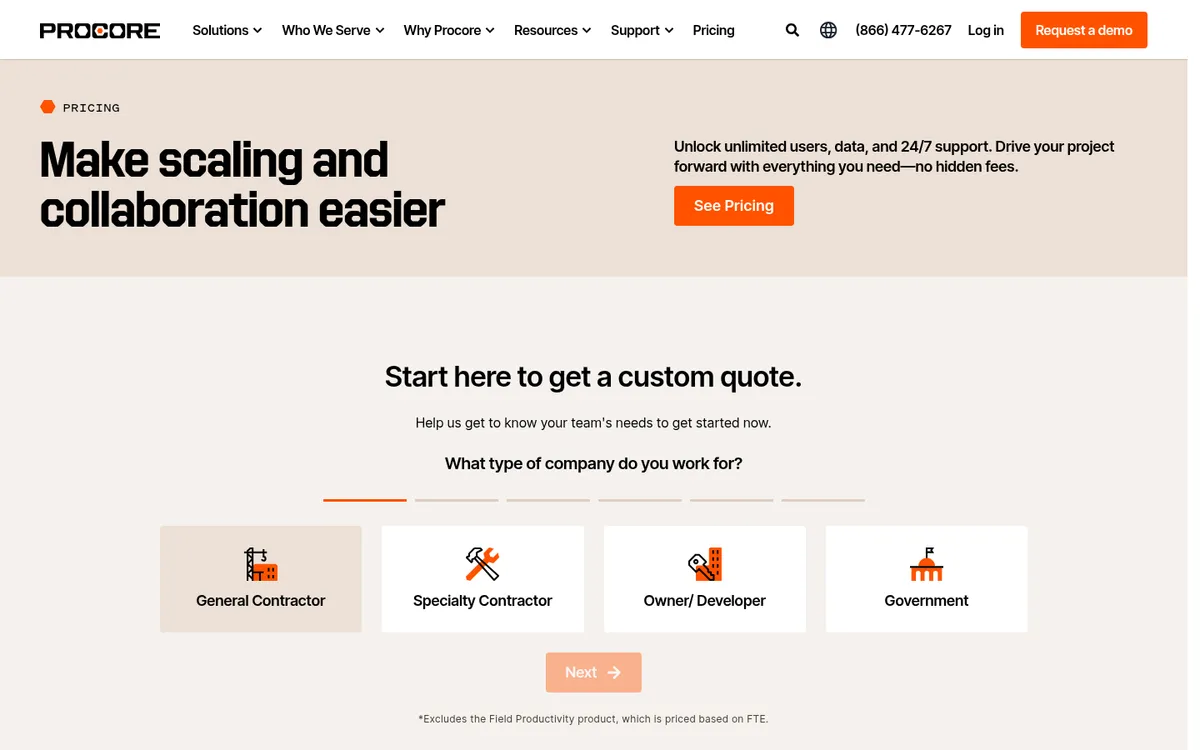
Pricing is not published. Procore charges an annual fee per product, scaled to a company’s Annual Construction Volume, so the price for a $20 million contractor and a $500 million one aren’t comparable. That model, verified on Procore’s own pricing page in October 2026, is also why Procore rarely suits a team evaluating bid software on its own merits; most buyers are already committed to Procore for other reasons before bid management becomes part of the deal.
Procore is not built for small contractors or teams that only need help with bidding. See our Procore vs Planyard comparison for how the two compare on cost control specifically.
6. Pantera Tools

Pantera Tools positions itself as the budget-friendly option among GC bidding platforms, with branded invitation-to-bid emails, an integrated plan room, and document and RFI sharing built into one system.
Pricing is not published on Pantera’s own site. Getting a number means requesting a demo, which we confirmed by checking the vendor’s site directly in October 2026.
Pantera is US only and lighter on bid comparison than BuildingConnected, Procore or SmartBid. It handles sending and tracking invitations well, but there is no dedicated leveling screen on the vendor’s own feature pages for lining up bids side by side.
Won the job? Compare subcontractor bids against the budget
Send RFQs from budget lines, compare bids side by side and award straight to a subcontract order. 14-day free trial, no credit card.
Best for comparing and awarding subcontractor bids against the budget
Once the job is won, bidding becomes a cost question. You send a scope to a short list of subcontractors, line their prices up against the budget line, and turn the winning bid into a contract without re-keying numbers. General contractors do this when they buy out trades, and subcontractors do it when they buy from their own subs.
1. Planyard

Planyard is built for small to mid-size contractors, developers, and the quantity surveyors who run cost control on their projects. The bidding software sits inside the same system as the budget, so comparing subcontractor quotes is not a separate step from managing the project’s money.
The subcontractor bidding module lets a project manager build an RFQ straight from a budget line, invite the right trade, and run more than one round of bidding if the first set of quotes needs tightening up. Subcontractors don’t need to create an account; they fill in a spreadsheet template and Planyard brings the numbers back into a side-by-side comparison automatically. Once a bid is chosen, it converts directly into a subcontract order with a schedule of values, or a purchase order, against that budget line, so the committed cost updates without anyone re-entering numbers.
Teams that want to compare bids on a single project before deciding whether they need software for it can start with our free construction bid comparison template and move into Planyard once the number of live tenders outgrows a spreadsheet.
"Overall, I would say it saves me a day a week. Because I use Planyard almost every day now for estimating, the time savings are huge. It offers the flexibility I always wanted from Excel, but it does so much more because it actually has the database to back it up, which is a massive advantage."
Read more
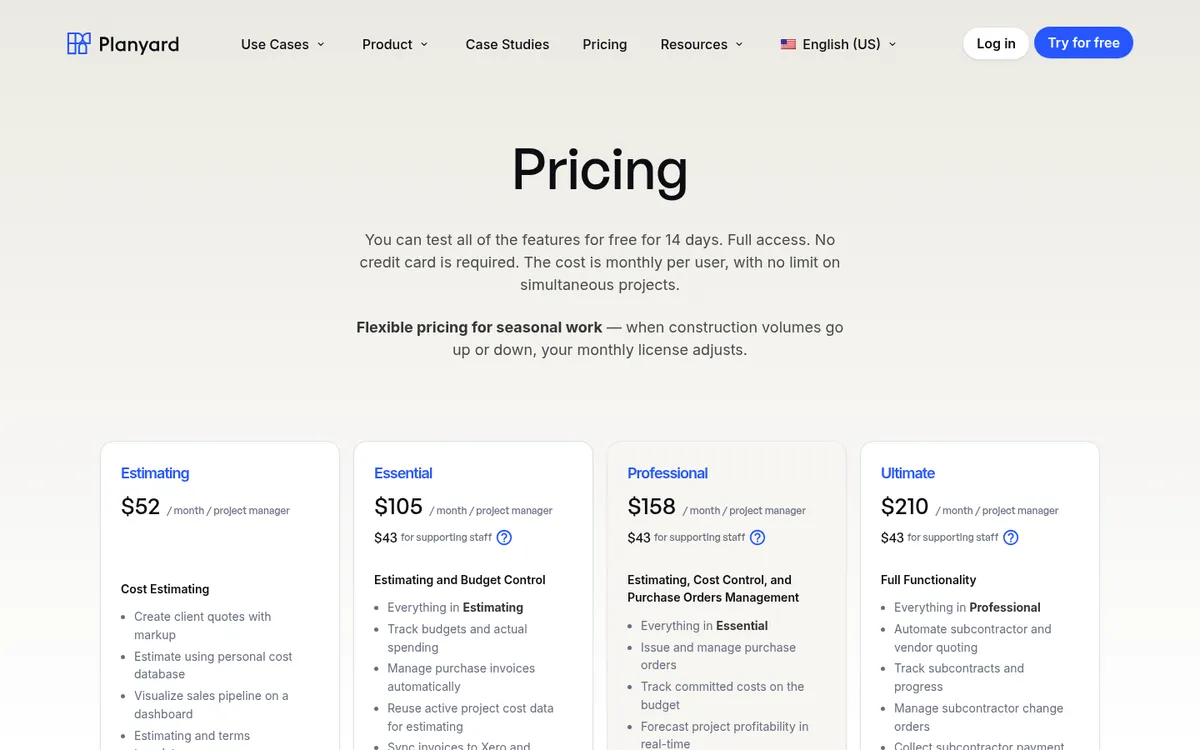
Pricing starts at $52/month per project manager for the entry Estimating plan, which doesn’t include subcontractor tendering. The RFQ and bid comparison features sit in the Ultimate plan, priced at $210/month per project manager as of October 2026, verified on Planyard’s own pricing page.
"It easily saves half of a Quantity Surveyor’s time. When you're looking at a £70,000 annual salary, that level of cost-effectiveness makes the decision to implement the system very simple."
Read more
Pair it with a bid network such as BuildingConnected or PlanHub if you also need to find new work or reach trades you have not worked with, and with a project management tool if you need scheduling, BIM coordination or field safety management. Planyard is a finance and procurement system and does not try to be a full construction management suite.
2. Buildertrend
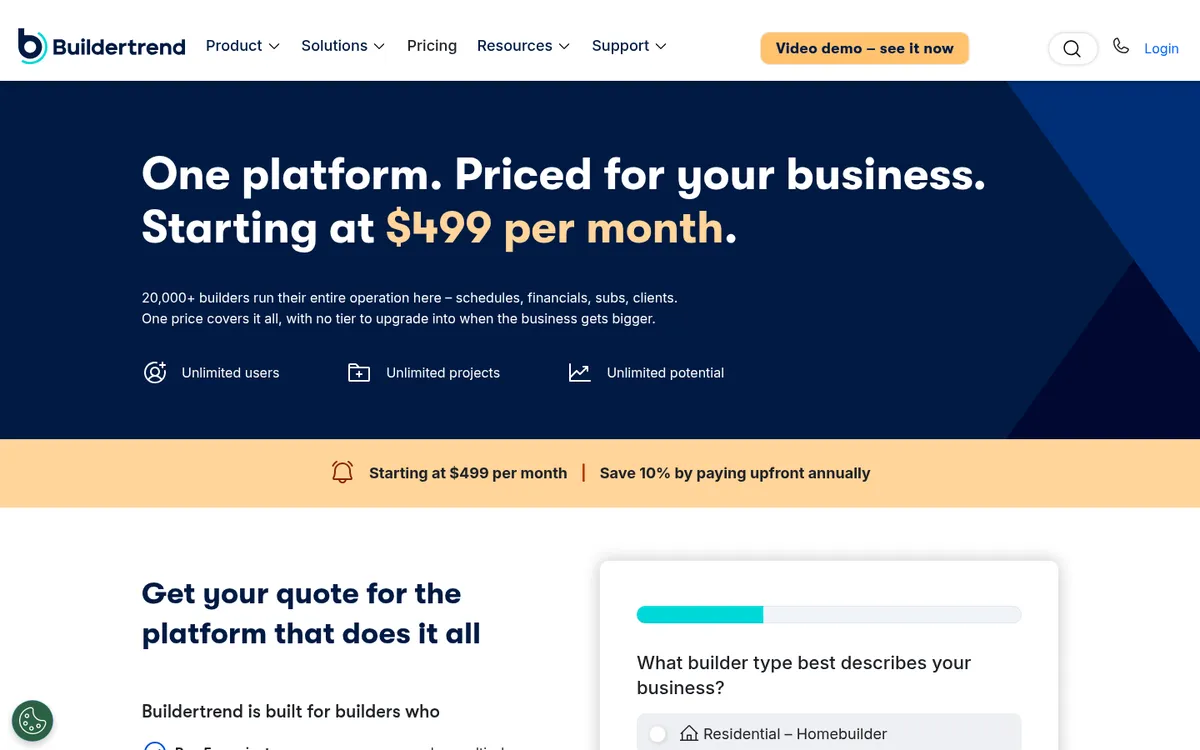
Buildertrend is built for residential builders and remodelers, and its Bids feature reflects that: a builder can send a bid package to several subcontractors at once, set deadlines, and have the numbers feed into an estimate. See our Buildertrend vs Planyard comparison for how the two differ on cost control.
Buildertrend starts at $499 a month, with 10% off for annual billing. The final quote comes from a short questionnaire about the size and type of your business, confirmed on its own pricing page in October 2026.
Buildertrend is available in the US, Canada, Australia, New Zealand and the UK, but it isn’t a subcontractor tendering platform in the way the rest of this list is. There is no dedicated bid comparison screen; the feature exists mainly to support a builder collecting a handful of trade quotes on a residential job, not to run a formal tender across a commercial subcontractor list.
How We Chose
We started from two live search checks in October 2026, one for the US version of “construction bid management software” and one for the UK version of the same query, since the term pulls roughly 200 monthly searches in the US and 150 in the UK. Every tool that appeared with a dedicated bid management product page made the list, alongside a short set of general contractor bidding suites that regularly come up in the same searches: Procore, BuildingConnected, iSqFt, SmartBid, Pantera Tools, PlanHub and Buildertrend.
From there we read each vendor’s own pricing and feature pages rather than third-party review sites, so a tool with no public price is marked as such instead of guessed at. We also checked which countries each vendor actually serves, because a few of these platforms are US-only networks that won’t help a UK reader even if they show up for the query.
Choosing Between These Tools
The clearest dividing line in this list isn’t price, since most vendors keep their pricing off their own site. It’s whether a tool is a bidding network or a cost control system that happens to include bidding. BuildingConnected, SmartBid, PlanHub, iSqFt and Pantera Tools exist to connect GCs and subcontractors, and to get the invitations, proposals and comparisons done before a contract is signed. Procore, Buildertrend and Planyard carry the winning bid further, into a contract or purchase order that sits on a live budget.
For a UK reader, the field narrows quickly. PlanHub, SmartBid, iSqFt and Pantera Tools are US only, so BuildingConnected, Procore, Buildertrend and Planyard are the realistic options outside North America. Among those four, Planyard is the one built specifically around subcontractor tendering and bid comparison for cost-controlled projects, rather than treating bidding as one feature among many.
From RFQ to signed subcontract on one budget
Planyard compares subcontractor bids against the budget and turns the winner into a subcontract order with a schedule of values. 14-day free trial, no credit card.