Construction CVR Software for Contractors

See project profit as you go - not after.

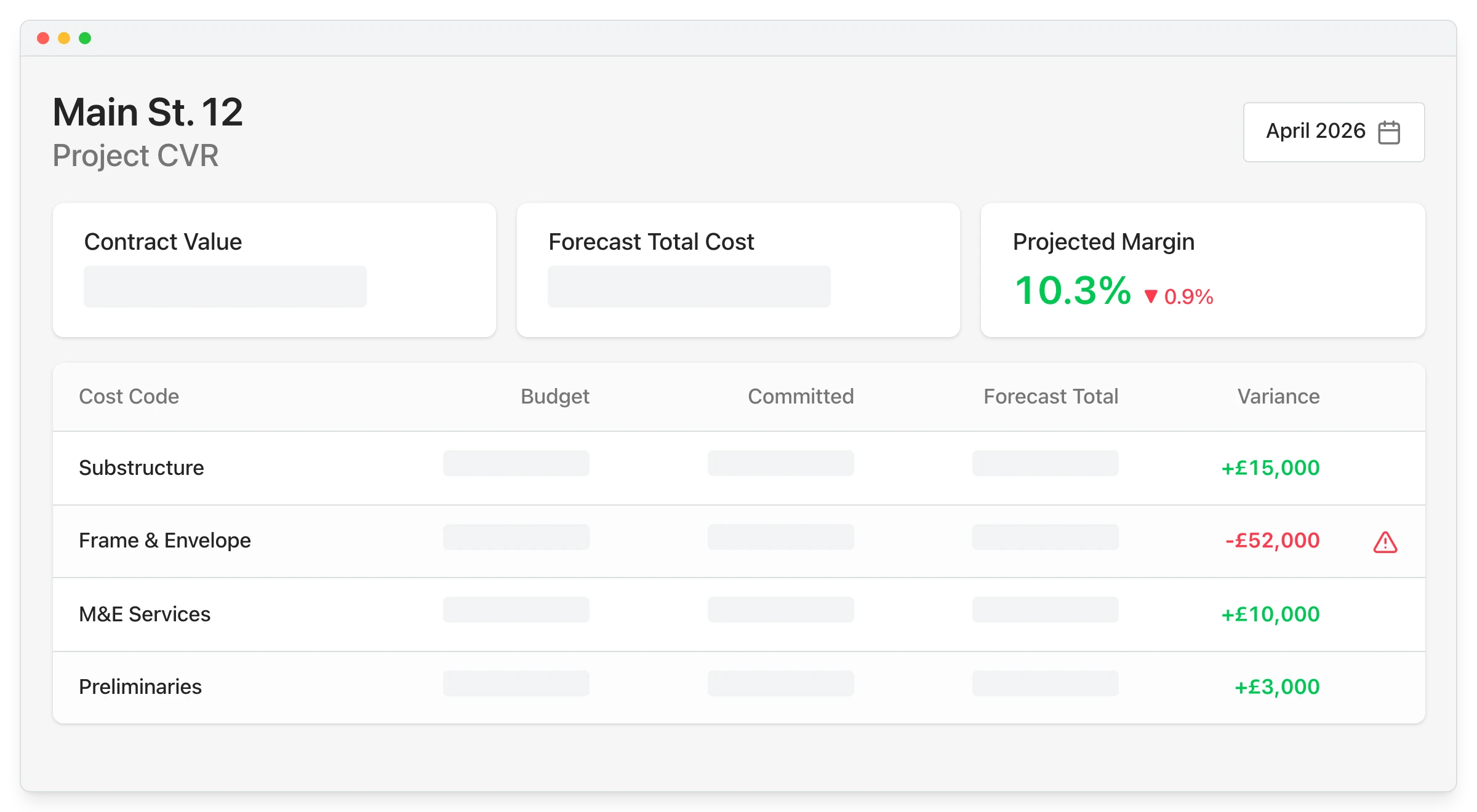
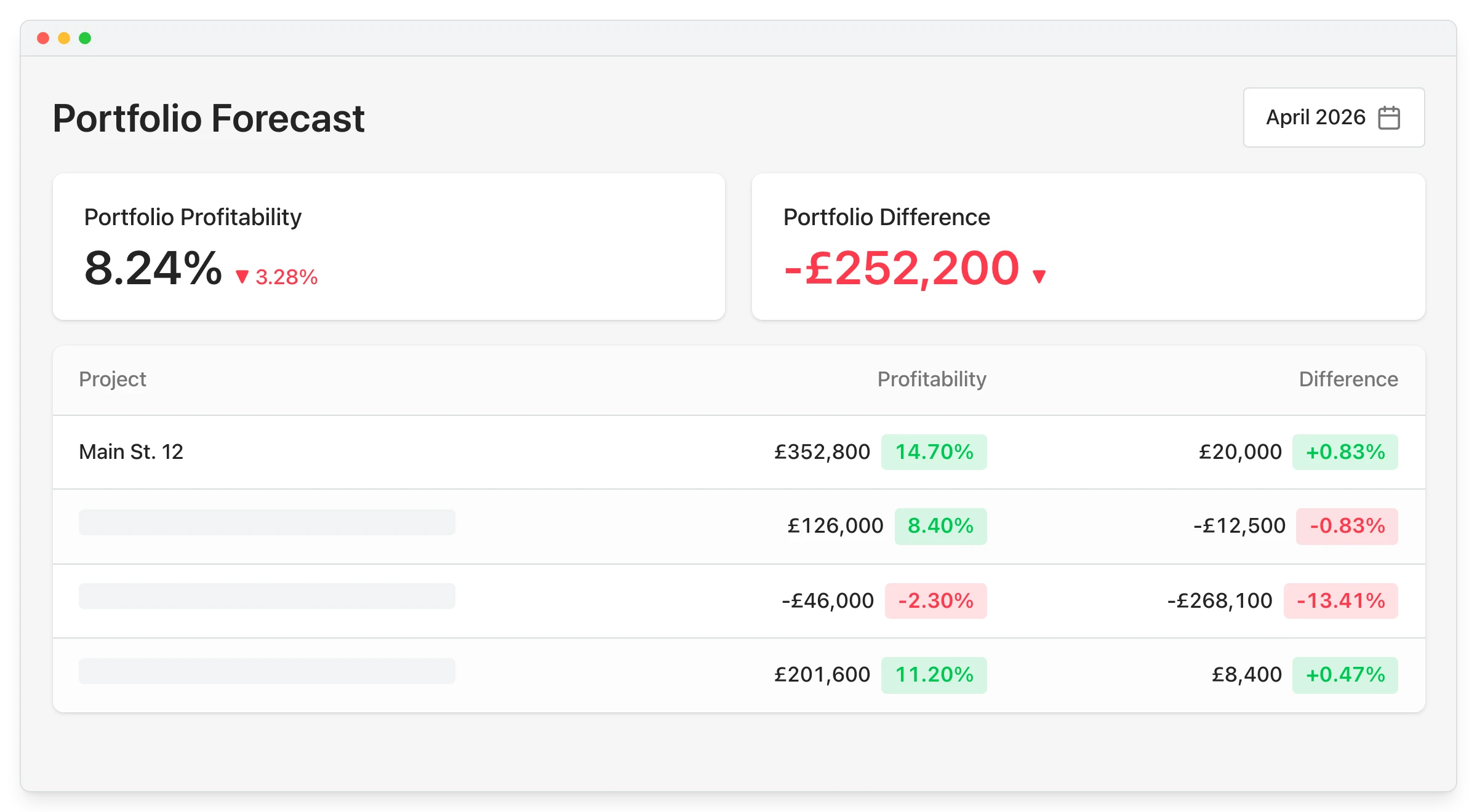
Planyard replaces manual CVR spreadsheets with a live system that connects your budget, orders, invoices, and committed costs in one place, so you can see where every project stands financially before month-end surprises hit.

Used by contractors that want tighter cost control, clearer visibility, and fewer spreadsheet-driven surprises.

Integrates with

Planyard construction budgeting software showing the budget overview screen with real-time updates on project costs, purchase orders, and invoices.

What is CVR in construction?

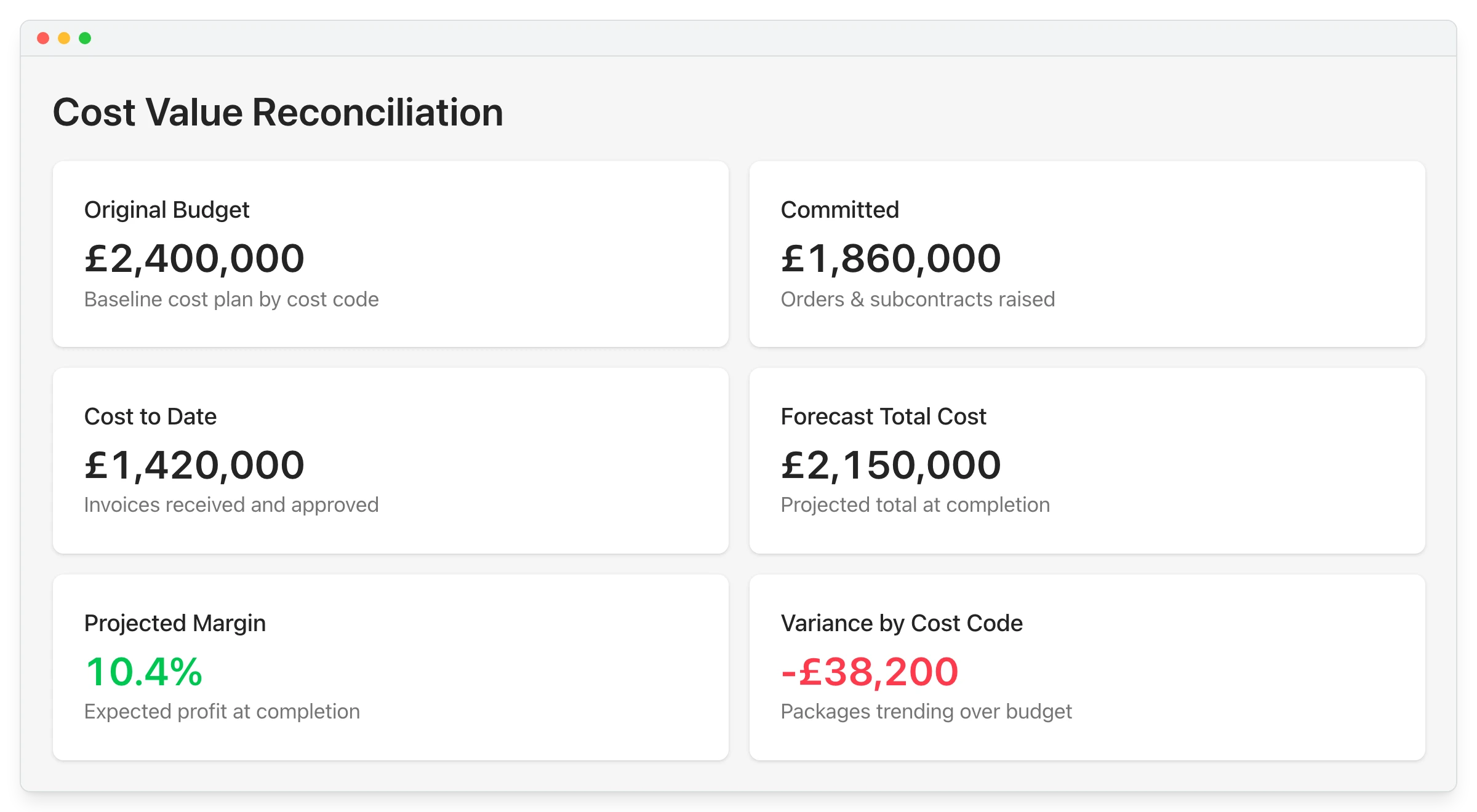
A construction CVR, or cost value reconciliation, is how contractors compare budget, cost, value, and forecast outcome to understand whether a project is making money and where it is likely to finish.

In simple terms, it answers a question every contractor cares about: where do we stand financially on this job right now?

  • Compare what you expected to spend with what you have spent and committed.
  • Forecast where the project is likely to finish.
  • Spot margin problems before they become losses.

A proper CVR is not just a report of past cost. It is a decision-making tool for controlling profit during the job.
Why do spreadsheet CVRs fail?

Spreadsheet CVRs usually break when the business grows, projects multiply, and too many people rely on manual updates to keep numbers current.

  • Too slow: month-end CVRs can take days to prepare.
  • Too fragile: spreadsheet formulas and duplicated entries are easy to break.
  • Too late: problems often appear after the money is already committed or spent.
  • Too hard to trust: information sits across Excel, inboxes, and accounting tools.

"When we used to do our month-end CVRs it could usually take 3-4 days to put them together. It now takes me 10-15 minutes to just quickly go through the jobs and check that I haven’t missed anything."

Read more
Claire Hill, Estimator and quantity surveyor
Claire Hill Estimator and quantity surveyor  ·  Brown & Bancroft Interiors  ·  Bolton, United Kingdom

How Planyard replaces CVR spreadsheets

Planyard replaces manual CVR reporting by connecting your budget, commitments, invoices, and approvals in one workflow, so your financial position updates as you work.

Instead of rebuilding the picture in Excel later, you keep it current during the job.

  • Start with the budget and manage orders against it.
  • Track committed and actual costs in one place.
  • Keep project profitability visible without separate monthly reporting.

"Planyard has completely replaced my CVR process. Cost Value Reconciliation is essentially about tracking your budget against your actual spend to see exactly what remains, and that functionality is the absolute essence of the central core of Planyard."

Read more
Ian Holford, Managing Director
Ian Holford Managing Director  ·  Higgihaus Developments  ·  Bristol, United Kingdom

CVR example: before and after

The biggest shift is not just speed. It is moving from delayed, manual financial reporting to live project control with one source of truth.

Before Planyard With Planyard
CVR is rebuilt manually in Excel.
CVR updates through daily workflow.
Costs are scattered across spreadsheets, inboxes, and accounting.
Budgets, orders, and invoices are connected in one place.
Visibility is mostly monthly.
Visibility is live and current.
Margin issues are found later.
Margin issues are easier to spot earlier.
Teams spend days compiling reports.
Teams review the numbers in minutes, not days, in the right setup.

"We wanted to know before a project finished whether we were going to make a profit or not. Planyard has allowed us to do that. We can see exactly which jobs are profitable and which ones are not and can make changes on the go."

Read more
Tomy Saaron, CEO
Tomy Saaron CEO  ·  Hausers Group  ·  Estonia

How CVR works in Planyard

Planyard follows the same commercial logic contractors already use, but removes the manual reconciliation work that usually sits around it. The system keeps budgets, commitments, and invoices linked so the financial view stays current as the job moves forward.

01

Set the budget - structure the budget by cost code, package, or phase so every line has a financial baseline.

02

Raise orders and commitments - record subcontracts and purchase orders against the budget before invoices arrive.

03

Process invoices and track profit - match incoming costs back to commitments and keep project profitability visible as you go.

"You can analyze costs at both a budget and subcontract level, making it easy to see exactly what has been ordered against your total commitments. That visibility filled a huge gap we had previously; Planyard completely solved that problem for us."

Read more
Sharon Brown, Financial Controller
Sharon Brown Financial Controller  ·  Empower Renewables  ·  Dublin, Ireland

Real-time CVR vs monthly CVR

A monthly CVR tells you what happened. A live CVR helps you change what happens next. That matters because committed costs, missed items, late invoices, and margin erosion do not wait for the month-end report.

  • Monthly CVR is retrospective; live CVR is operational and forward-looking.
  • Live visibility helps you see commitments before they become accounting history.
  • Earlier visibility gives directors, QSs, and PMs more time to act.

"With Planyard, the financial data is live, meaning you have a real-time view of where the project stands at any moment. When I was relying on Excel, I could only manage that kind of insight once a month. The transition from monthly snapshots to a live dashboard has completely changed how we monitor our project health."

Read more
Jason Escobar, Project Management / Systems & Process Dev
Jason Escobar Project Management / Systems & Process Dev  ·  The Keane Group  ·  Queensland, Australia

Who it's for

Main and fit-out contractors

Contractors managing multiple live projects who need tighter financial control without moving into a heavy enterprise system.

QSs, commercial managers, and directors

Teams who need trusted project numbers quickly, without spending days compiling month-end reports.

SMEs that have outgrown spreadsheets

Growing businesses where spreadsheet CVRs are becoming slow, fragile, and hard to trust at scale.

Xero and QuickBooks users

Contractors already using Xero or QuickBooks for bookkeeping who need better commercial control sitting on top.

Why contractors choose Planyard

Everything updates as you work

The team does not need to rebuild reports separately. The numbers update through daily workflow.

Budgets and invoices stay connected

Budgets, orders, and invoices stay connected in one workflow from budget to final account.

See profit before the project is finished

You can see profit position in real time rather than waiting for month-end to find out where you stand.

Accounting stays in Xero or QuickBooks

Accounting stays in Xero or QuickBooks while Planyard handles live project cost control above it.

"Planyard takes your project budget and puts it very clearly on screen, allowing you to account for all your costs, invoices, and receipts as you process them before they even reach the accounting department. This gives you a live, real-time picture of exactly where your project budget stands at any given point."

Read more
Ian Holford, Managing Director
Ian Holford Managing Director  ·  Higgihaus Developments  ·  Bristol, United Kingdom

From 3-4 day month-end CVRs to live project visibility

"When we used to do our month-end CVRs it could usually take 3-4 days to put them together. It now takes me 10-15 minutes to just quickly go through the jobs and check that I haven’t missed anything."
Claire Hill
Claire Hill
Estimator and quantity surveyor Brown & Bancroft Interiors
Read the full story →

Stop rebuilding CVRs in spreadsheets.

See committed costs, actual spend, and project profit in one place as you go.