
Procore is a cloud-based construction management platform. It puts scheduling, documents, budgets and team communication in one system, sold as separate modules, and it suits mid-size and large contractors best. Procore does not publish prices; reported figures start around $375 a month, and larger firms can pay over $20,000 a year.
What is Procore and What Does It Do?
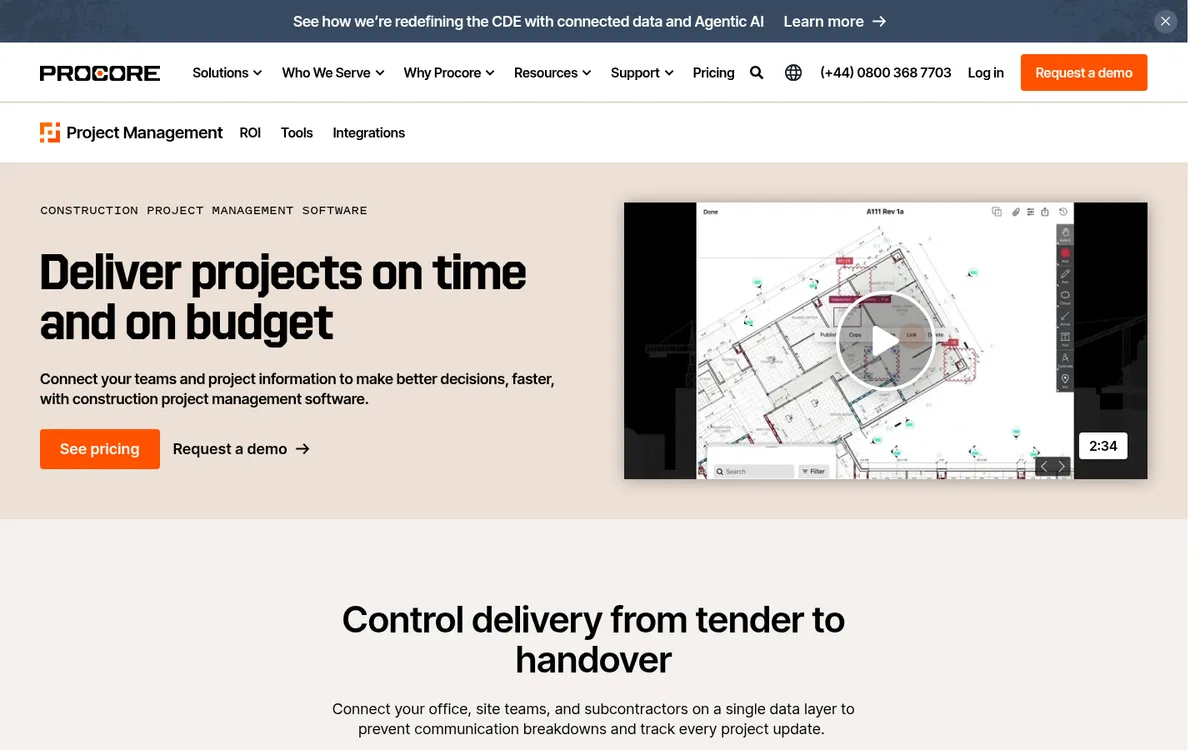
Procore gives office and site teams one place for project information. Schedules, tasks, budgets, documents and messages live in the same system, and everyone sees changes as they are made.
The pitch is fewer errors and delays from people working off outdated files or disconnected systems. Because companies buy it as modules, two Procore customers can end up with quite different setups.
What Is Procore Used For?
Contractors use Procore to plan and run projects, keep track of the money, and keep the site and the office working from the same information. Some also use it to track labour, equipment and materials.
The benefit customers point to most is time. Pulling the tools together cuts manual data entry and repeated work, and when everyone sees the latest information, fewer mistakes come from teams that weren’t told about a change.
Procore Features, Modules and Integrations
You pick the modules you need and pay for those. The main ones:
| Module | What it does | Who uses it |
|---|---|---|
| Project management | Schedules, tasks, workflows and project documents | Project managers and site teams |
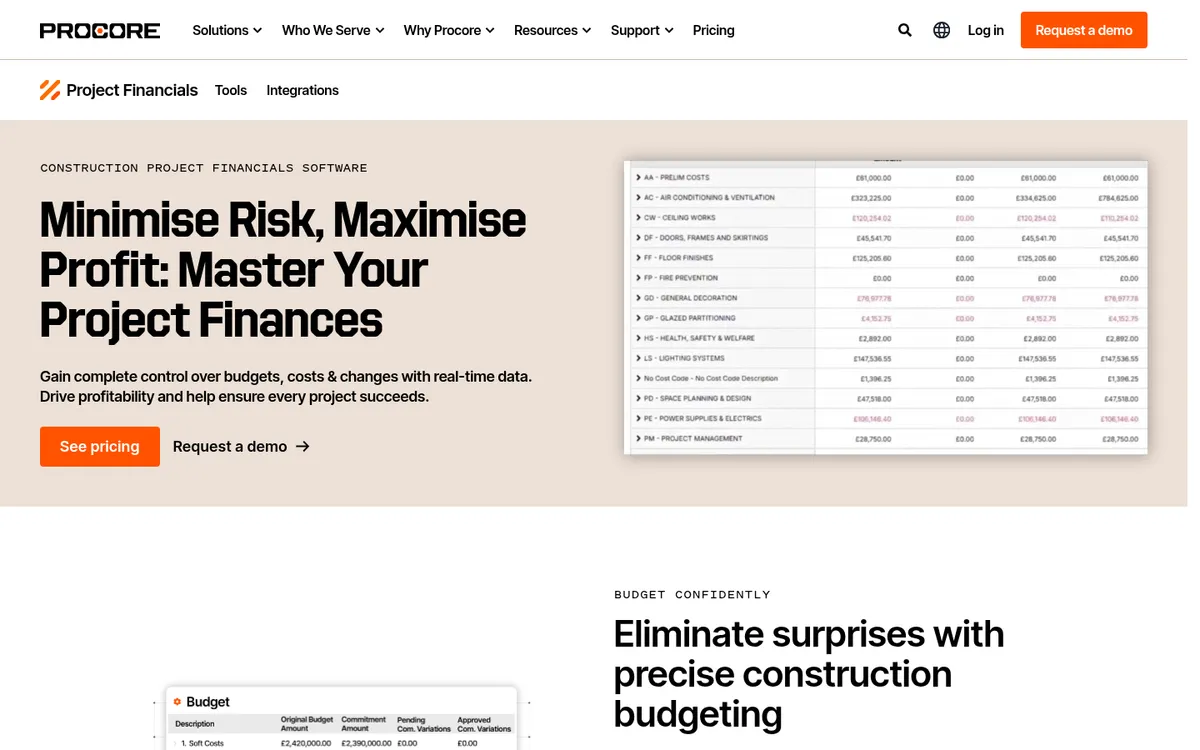
| Financials | Budgets, expenses, forecasts and profitability | Project managers and finance teams |
| Collaboration | Live project updates shared between office and site | Everyone on the project |
| Resource management | Labour, equipment and materials | Project and site managers |
Procore connects to accounting software including QuickBooks, Sage and Xero, and to design tools such as AutoCAD and Revit, so data moves between systems without being typed in twice.
It runs on desktop, tablet and phone, so people can check project details from the office or the site.
Need cost control without the whole Procore platform?
Planyard tracks budgets, invoices and forecasts for each job and syncs with Xero, QuickBooks or Sage. 14-day free trial.
Who Uses Procore and How Much Does It Cost?
Procore works for teams of any size, but it pays off most for medium and large companies on complex projects. Typical users are general contractors, subcontractors, project managers and firms that coordinate many stakeholders at once.
"The price disparity between a system like Planyard versus something like Procore or Sage is absolutely vast. For a business of our size, finding a solution that offers this level of professional functionality without the massive overhead of those larger systems is a significant advantage."
Read more

Procore doesn’t list prices. It quotes each company on an annual contract, priced on annual construction volume with unlimited users, and the price goes up with each module you add. Our guide to the cost of Procore breaks down what drives the quote.
Many larger firms say the price is worth it because Procore helps them avoid expensive mistakes and finish projects on time.
Procore Alternatives
Procore’s breadth and price suit bigger firms. Smaller contractors whose main job is keeping project costs under control often want something narrower and quicker to roll out. Our guide to Procore alternatives compares tools built around budgets, job costing and forecasting, including Planyard, which is our product.
Conclusion and Complementary Tools
Procore is one of the best-known construction management platforms. Its strengths are project management and collaboration across many teams, with modules and integrations that let each firm shape it to their own work.
Some Procore users add a separate tool for budgets and financial control. Planyard, our product, is one option. It syncs with accounting software, updates budgets automatically and tracks profitability on each project. It doesn’t do scheduling, drawings or field work, which Procore already covers.
"When you look at your margin without using Planyard, you might think you’re making 21%. But are you really if things have been missed and you can’t see them? Planyard lets you see a true margin all the time."
Read more
If you already use Procore or are weighing it up, Planyard can sit alongside it for cost management, or replace it if cost control is all you needed.
Budgets and forecasts without the heavy setup
Planyard is the lighter cost-control option for contractors who find Procore too big. It syncs with Xero, QuickBooks or Sage, and you can try it free for 14 days.