
Construction projects are intricate, multi-faceted endeavors involving numerous stakeholders, financial resources, and logistical challenges. Despite thorough planning, many projects experience construction cost overruns, where actual expenses exceed initial budgets. These overruns can lead to significant financial losses, delays, and strained relationships between contractors, clients, and investors.
Understanding the root causes of cost overruns and implementing proactive strategies can help mitigate these risks. This article will explore why cost overruns occur, provide real-world examples, and outline actionable solutions for contractors, developers, and project managers.
What Are Construction Cost Overruns?
A construction cost overrun occurs when the final cost of a project exceeds the estimated budget. Overruns can range from minor budgetary discrepancies to massive financial shortfalls, potentially making projects unviable.
Common Types of Cost Overruns
- Material Cost Overruns – Price fluctuations and supply chain disruptions.
- Labor Cost Overruns – Increased wages, overtime, or unexpected workforce shortages.
- Scope Creep Overruns – Additional work requested beyond the initial agreement.
- Regulatory Overruns – Unplanned costs due to new laws or compliance issues.
- Design Changes Overruns – Revisions and errors leading to additional expenses.
- Administrative Overruns – Inefficiencies in project approvals and contract processing.
- Technology Overruns – Higher-than-expected costs for software, automation, and other digital tools.
Common Causes of Construction Cost Overruns
1. Inaccurate Project Estimates
One of the leading causes of cost overruns is inaccurate estimates during the planning phase. Estimators may rely on outdated data or fail to account for inflation, resulting in budgets that do not reflect real-world costs.
Solution: Utilize advanced estimating software that integrates real-time market data and historical cost analysis. Conduct multiple cost estimation rounds and involve stakeholders in refining budgets.
2. Design and Planning Errors
Flawed blueprints, incomplete architectural designs, or misinterpretation of client requirements often lead to costly changes during construction.
Solution: Invest in Building Information Modeling (BIM) and thorough design reviews to catch errors early. Engage experienced architects and engineers to verify designs before approval.
3. Scope Creep and Change Orders
Scope creep occurs when additional work is requested beyond the initial contract. While some changes may be unavoidable, unchecked modifications can inflate costs and extend timelines.
Solution: Establish a strict change management process and use contract clauses to define scope changes clearly. Require stakeholder approvals before initiating scope modifications.
4. Unforeseen Site Conditions
Unexpected underground utilities, soil instability, or environmental hazards can increase costs significantly.
Solution: Conduct geotechnical surveys, environmental assessments, and utility mapping before breaking ground. Allocate contingency funds for unpredictable site issues.
5. Poor Project Management
Miscommunication, scheduling conflicts, and lack of coordination between teams can delay work and increase labor costs.
Solution: Implement construction project management software to track progress, manage schedules, and improve communication. Use agile project management techniques to adapt to challenges efficiently.
6. Inflation and Market Fluctuations
Material and labor costs can spike due to global economic conditions, trade tariffs, or supply chain disruptions.
Solution: Lock in pricing with suppliers through long-term procurement agreements and include contingency funds. Monitor economic trends to anticipate potential cost increases.
7. Legal and Regulatory Issues
Compliance with local building codes, zoning laws, and environmental regulations can lead to unexpected costs if not addressed early.
Solution: Engage legal experts during project planning to ensure compliance and avoid penalties. Create a dedicated compliance team to track changes in regulations.
Seven Budget Management Factors Behind Cost Overruns
The causes above come from the site, the market and the design. Many overruns also start inside the budget itself, in how it is set up and tracked. Statistics show that the larger the project, the higher the probability of an overrun, and most budgets that overrun were poorly planned and gave little visibility into costs. From Planyard’s conversations with project organizations, these seven factors come up most often.
1. The Budget Is Not Reworked When the Project Starts
Projects often start back to back, so project managers do not get time to prepare for the next one. On large projects the estimate may have been put together months or even years before the budget reaches the project manager, and the actual cost of some tasks will have changed since. The project manager should take one to two weeks to process the budget and set realistic account costs. This brings budget threats to light early. Once the analysis is done, the management team and the project manager should go through it together and set the cost goal for the project, including the project manager’s bonus for delivering as planned.
2. The Budget Is Only Partially Managed
For many of the organizations Planyard has talked to, the budget is only partially managed. Sometimes it is just a list of articles and a sum of expenses. Costs cannot be tracked accurately when there is no link to the designer’s original list of materials, units and quantities. The estimator’s forecasting information is often missing too, even though the end price was built on that estimate. Without this information it is hard or impossible to see who is responsible for an error at the accounting level: the designer who produced poor material estimates, the estimator who estimated poorly, or the project manager who negotiated a poor deal. It also leaves estimators with very limited access to relevant cost data.
3. Cost Codes Are Not Used Consistently
It is surprisingly common for budgets to be coded differently within the same company. Cost codes should be a common language for describing projects, so that each one is trackable for the management team, auditors, estimators, project managers and project engineers. Using the same cost codes companywide is what makes business intelligence possible: analyzing article costs across projects at company level, using historical data such as contracted costs, and evaluating the performance of team members. It is also what makes forecasting your construction project’s profitability possible.
4. Jobs Are Not Divided Into Chronological Phases
Many budgets are a flat list of articles and their costs. A budget like that gives no overview of how the project is progressing, whether the early stages produced extra income or an overrun, or whether later phases need to find savings. A budget should be structured in clear chronological phases: all costs related to groundwork under one category, the foundation works under the next, and so on. When the foundation phase ends and the next stage begins, you know how the cost targets for that phase were met.
5. Only Income Versus Expenses Is Tracked
In some organizations the management team only follows whether current project income exceeds expenses. The project manager’s goal then becomes keeping income above expenses at every stage, by delaying subcontractor payments wherever possible and negotiating higher payments from the customer. The problem is that when the project ends and the profit statement looks fine, the delayed costs start arriving. An apparent profit can turn into an unexpected loss in the final stages of the project.
6. No Real-Time Control Over Costs at a Detail Level
Budgets kept in spreadsheets, coded inconsistently, with no tracking against set goals, and stored in separate folders or on file sharing platforms cannot be controlled at account level in real time. Account-level control across projects lets project managers spot errors when they occur and act on them immediately. It also lets project phases be handed to a colleague: if a project manager is away or cannot be reached, it is still easy to see what was done before and follow up on it. Management keeps full control over all projects and can spot budget errors, and estimators can compare estimated units and costs with actual expenses across projects.

7. Budget Tracking Takes Too Much Time
Project managers spend a surprising amount of time on project cost and budget management. When Planyard has asked project managers about this, those on large-scale projects report spending up to 25% of their time on finance management. That is time key members of the project team spend on routine tasks instead of on the project.
Real-World Examples of Construction Cost Overruns
Sydney Opera House, Australia
- Initial Budget: $7 million
- Final Cost: $102 million
- Cause: Poor planning, frequent design changes, and unforeseen challenges.
Boston’s Big Dig, USA
- Initial Budget: $2.8 billion
- Final Cost: $8 billion
- Cause: Mismanagement, unexpected geological conditions, and regulatory changes.
Berlin Brandenburg Airport, Germany
- Initial Budget: €2 billion
- Final Cost: €7.3 billion
- Cause: Design flaws, contractor disputes, and regulatory issues.
SoFi Stadium, USA
- Initial Budget: $2.6 billion
- Final Cost: $5.5 billion
- Cause: Rising material costs, scope changes, and permitting delays.
Strategies to Prevent Cost Overruns
1. Accurate Cost Estimation
Use modern estimating software to generate precise, data-driven cost projections. Regularly update estimates as project variables change.
2. Strong Contract and Change Order Management
Clearly define project scope and establish change control procedures to prevent scope creep and uncontrolled modifications.
3. Robust Project Management Practices
Adopt construction management software such as Planyard to track project costs, manage budgets, and ensure timely execution.
4. Detailed Site Assessments
Perform soil tests, environmental assessments, and feasibility studies before construction to minimize unexpected conditions.
5. Supplier and Contractor Coordination
Work with reliable suppliers and contractors who have a track record of delivering on time and within budget.
6. Regulatory Compliance Planning
Stay informed about industry regulations, secure necessary permits early, and consult legal experts to avoid costly compliance issues.
7. Contingency Planning
Set aside at least 10-20% of the total project budget as contingency funds for unexpected expenses.
Role of Software in Cost Overrun Prevention
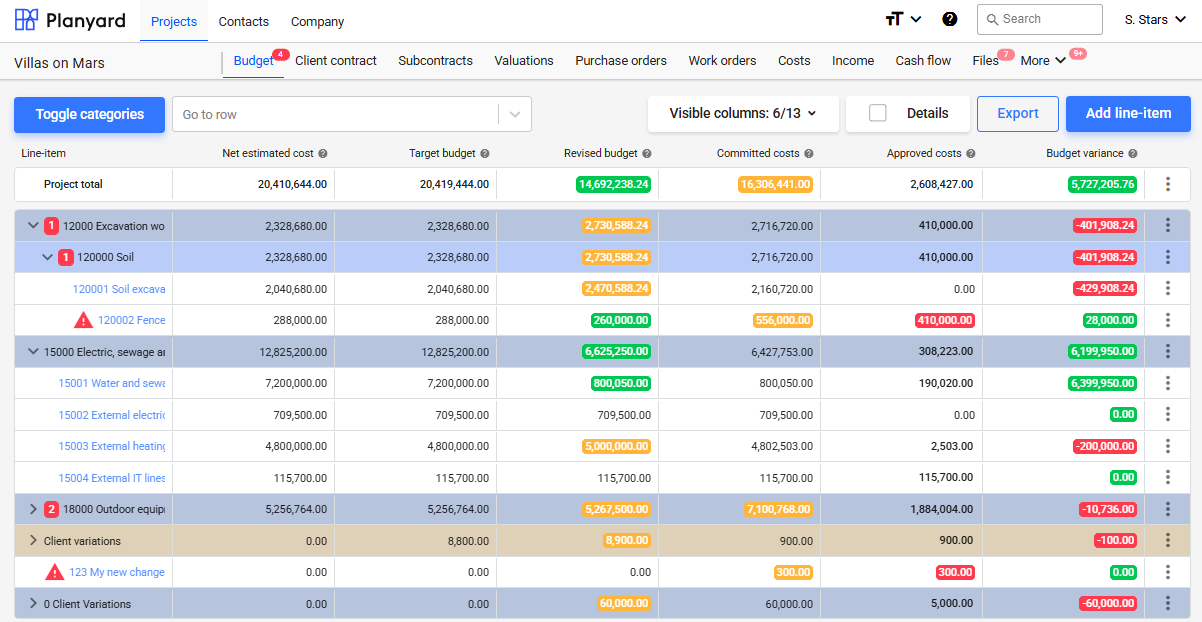
Construction management software, like Planyard, helps reduce cost overruns by providing:
- Real-time budget tracking
- Automated cost reporting
- Purchase order and invoice management
- Collaboration tools for teams and subcontractors
- AI-driven forecasting and cost prediction
Conclusion
Construction cost overruns remain a significant challenge, but with careful planning, advanced project management tools, and strict financial oversight, they can be minimized.
By leveraging construction project management software like Planyard, firms can track costs in real time, ensure better budget adherence, and complete projects more efficiently.