


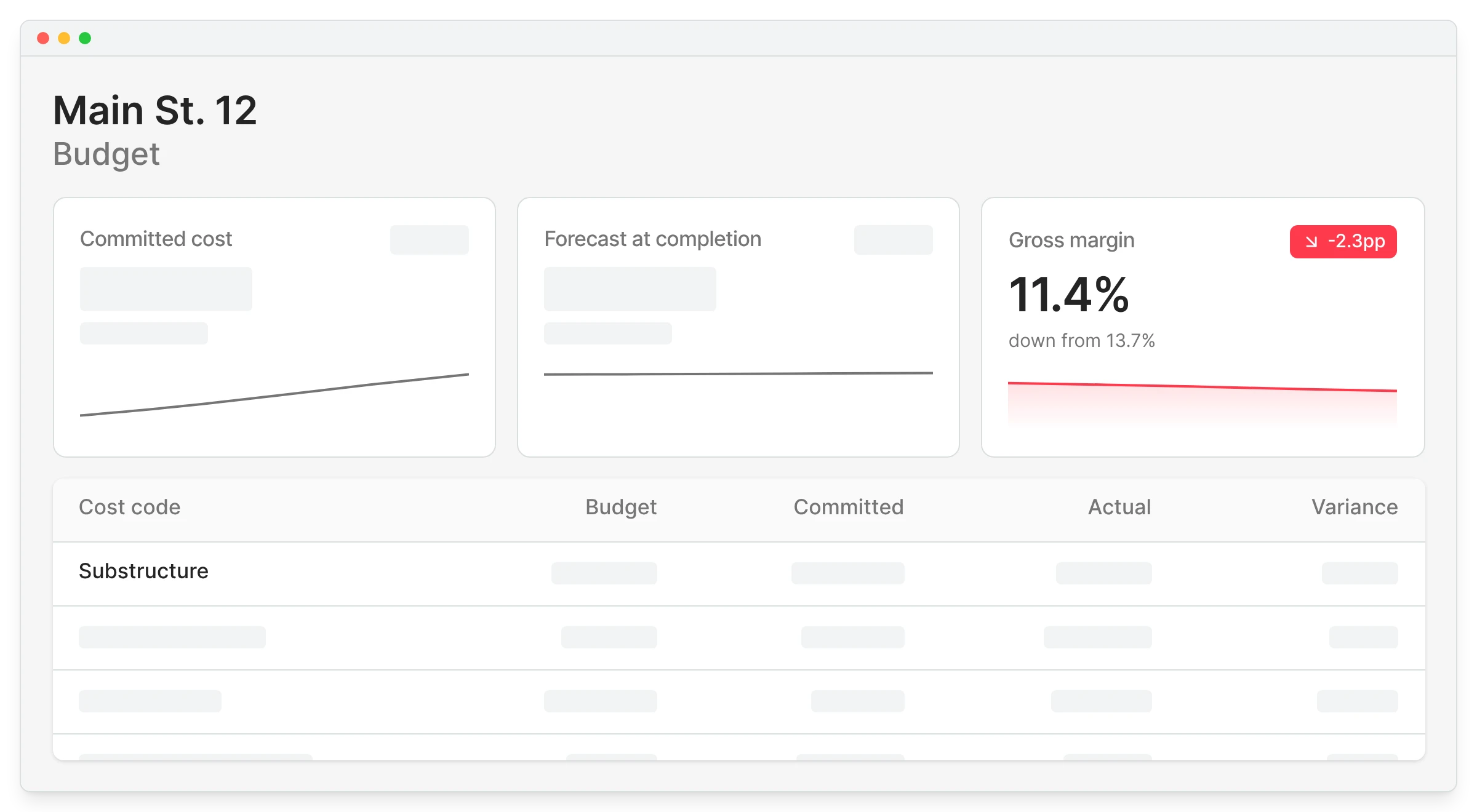
Who this is for
This is for contractors who have outgrown spreadsheet-based cost tracking but do not want a heavy, bloated system.
There are also tailored pages for small contractors, subcontractors, and house builders.
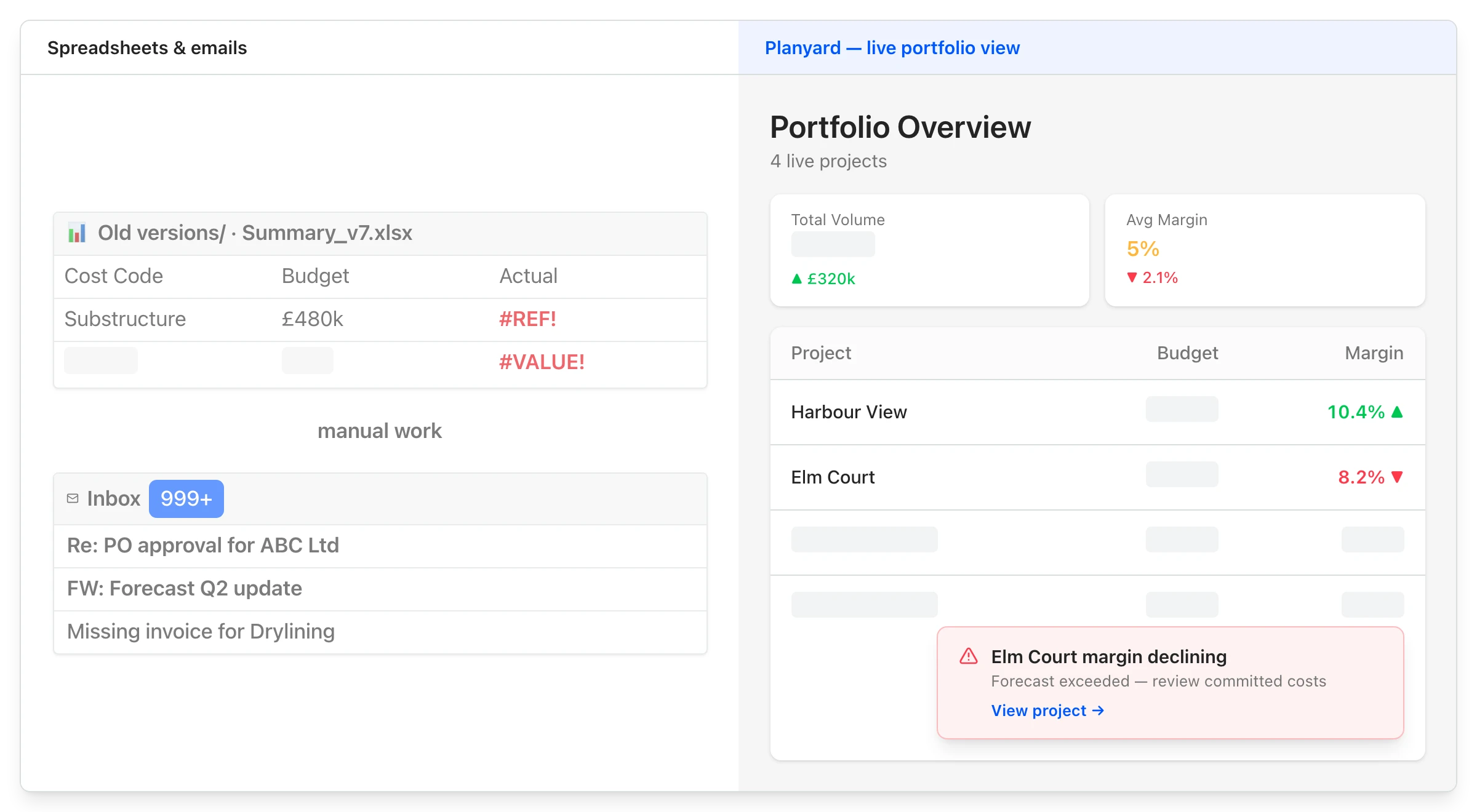
This is for contractors who have outgrown spreadsheet-based cost tracking but do not want a heavy, bloated system.
There are also tailored pages for small contractors, subcontractors, and house builders.
Managing multiple live jobs at once
Responsible for budget control
More control without enterprise complexity
Missing a live project cost-control layer
"Many competitors are too bloated, offering thousands of features that just get in the way. While other systems try to do everything at once and end up doing nothing well, Planyard is laser-focused on job costing. It ensures that critical part of the business is completely under control, doing one thing exceptionally well instead of fifty things poorly."
Read more
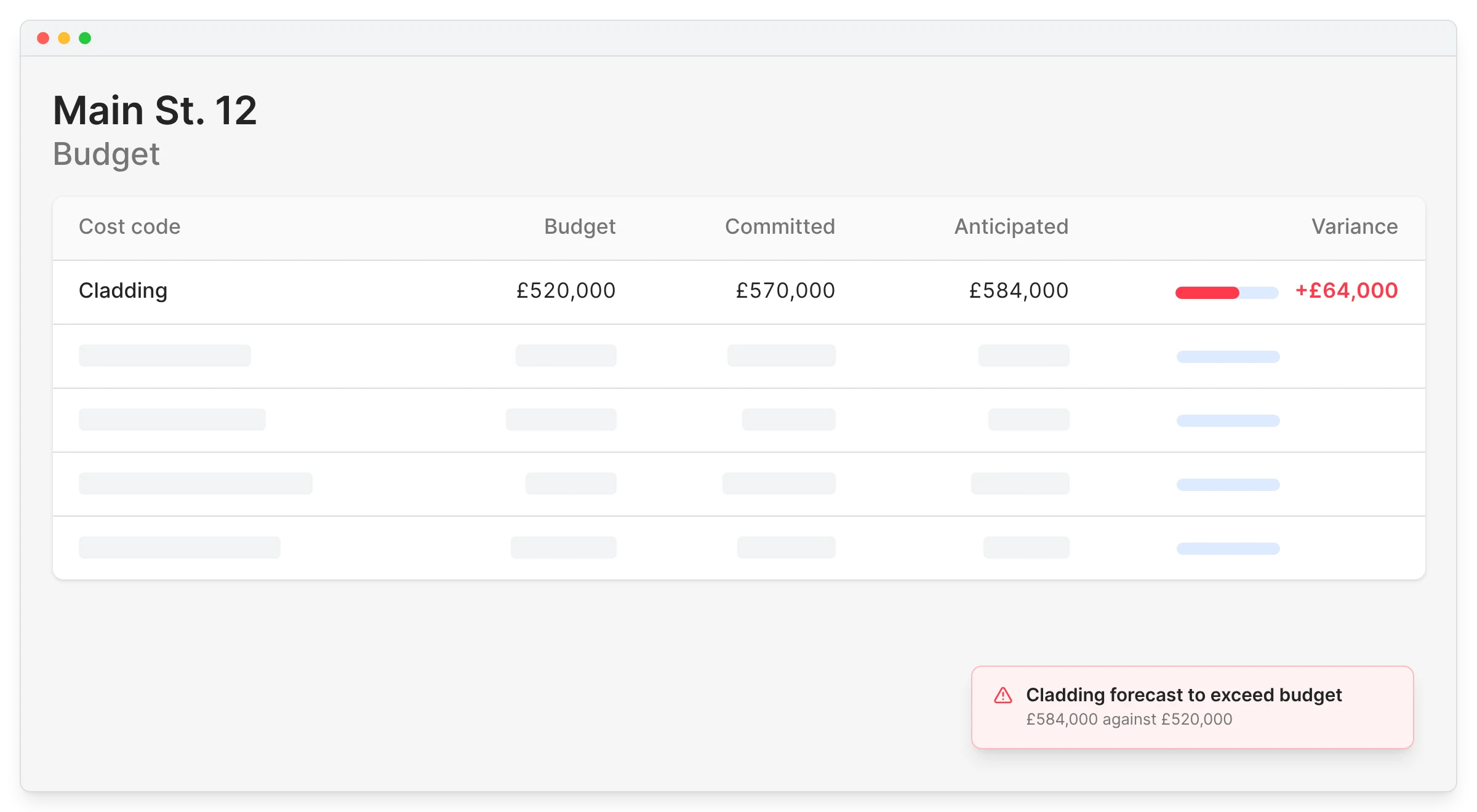
Construction teams need more than a record of what has already been spent. They need a live view of cost movement across the project so they can stay ahead of issues.
Book a demoSee what you are on the hook for early
Current spend against budget, live
One place for the whole cost picture
PMs, QSs, and finance share the numbers
"In summary, the most important thing for the company was to have an overview and control over costs, and to be able to immediately see where a cost has been entered and verify if everything is correct."
Read more
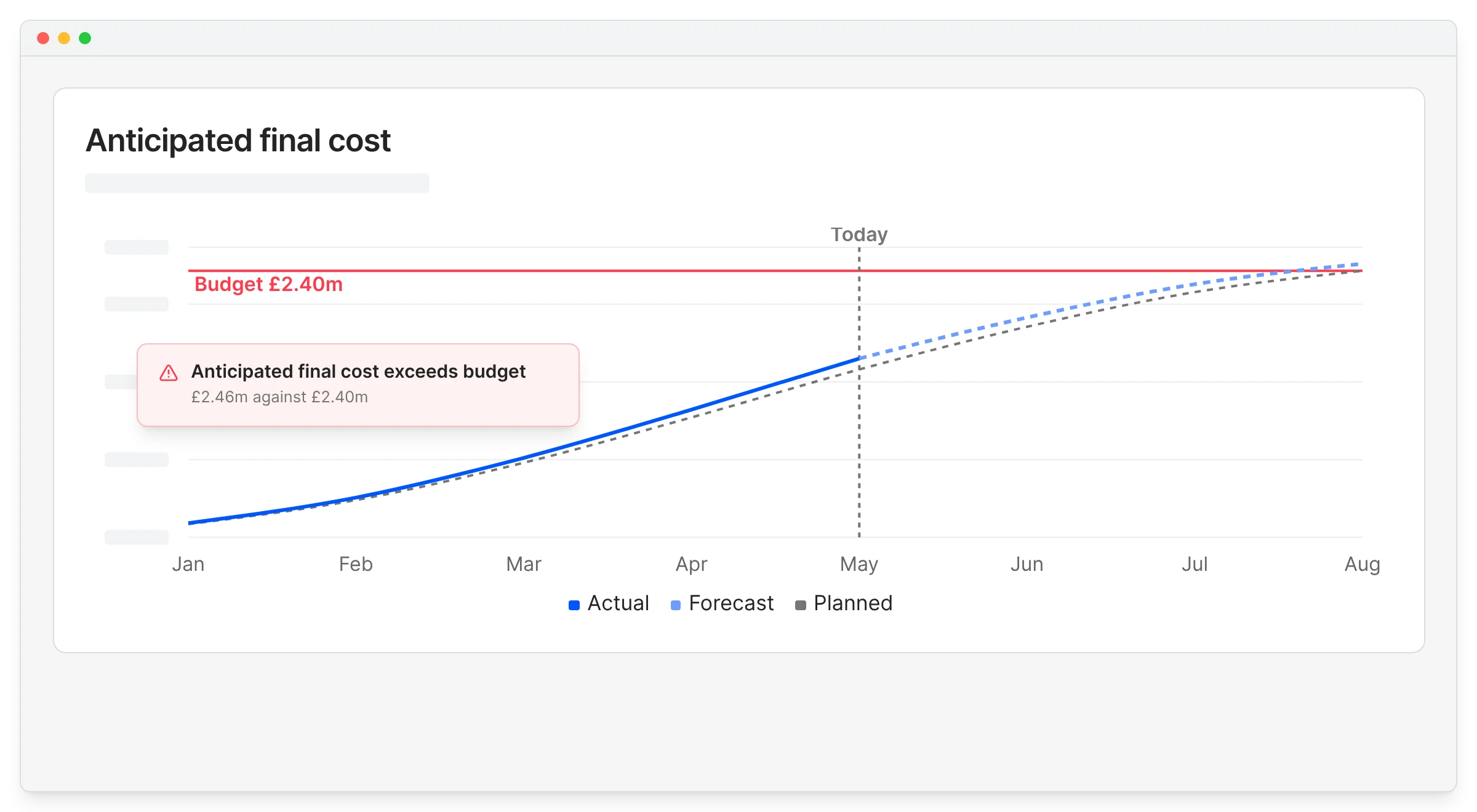
Cost control is not just recording spend. It is seeing where the project is heading early enough to fix it.
Not after month-end
Across job phases and categories
Act before margin is lost
Revised position before it is locked in
"It’s ultimately a full costing solution fór construction businesses. It’s not just a part of this. It gives them the ability to control the full cost."

Construction teams usually start in spreadsheets because they are flexible and familiar, but as jobs grow it becomes harder to keep the numbers up to date and trust what you see. If you want the fundamentals first, read our guide on what construction cost control is. If you are moving off spreadsheets, see our construction spreadsheet alternative for cost control.
| Spreadsheets | Construction cost control software | |
|---|---|---|
| Updating costs | Manual updates after every invoice or change |
Costs update automatically as orders and invoices are handled |
| Committed costs | Hard to see until invoices arrive |
Committed costs visible as soon as POs and subcontracts are raised |
| Version control | Multiple files and versions, easy to lose track |
One live project view shared across the whole team |
| Error risk | Formulas and links can break without anyone noticing |
Structured workflows reduce manual data entry and mistakes |
| Time spent | Hours or days each month to rebuild the picture |
Minutes to review live dashboards and reports |
"The contractor would typically send over an email containing a zip file with about 150 invoices every single month. Trying to manually allocate each of those to the correct invoice in Excel, and then further allocate them to specific cost codes within the building to get a reasonable assessment of our spending by category, was an incredibly time-consuming and frustrating process."
Read more
Planyard is the live project cost-control layer on top of your accounting system. Approved invoices flow through to Xero, QuickBooks, and more. See how Planyard adds construction cost control for Xero users.


Use Planyard to replace spreadsheet-heavy construction cost control with one live workflow your whole team can trust.
We've got your questions covered. If you can't find the answer below, then feel free to contact us via the chat.
Construction cost control software helps contractors track budgets, committed costs, invoices, and project profitability in one place so they can see where a job stands before cost issues show up too late.
Accounting software records financial transactions and supports bookkeeping. Planyard is used by project and commercial teams to manage live job budgets, commitments, and cost visibility during the project.
As projects grow, spreadsheet cost control becomes slower, harder to trust, and heavily dependent on manual updates. That makes it easy for overruns and missed costs to show up only at the end of the month or end of the job.
Yes. You can see commitments from purchase orders, subcontract orders, and variations before the invoices are approved, so you know your likely final position earlier.
Yes. Planyard is designed to be the live project cost control layer on top of your accounting system. Projects are controlled in Planyard, and approved invoices are pushed through to accounting.
No. It is built for growing contractors and specialist trades that have outgrown spreadsheet cost control but do not want the complexity or price of heavy enterprise systems.
 Go to site for